Don't wait until you're touched out, checked out, and carrying it all to talk about what partnership should look like.

You shouldn't have to carry the entire emotional weight of your family.
Six weeks. Real conversations.
A practical plan for becoming parents without losing your partnership.
You're preparing for a baby. You've probably researched strollers, birth preferences, feeding, sleep, and everything that needs to happen before this tiny human arrives.
But have you prepared for what happens to your relationship when you become parents?
Because nobody talks enough about what happens when one person quietly becomes responsible for everyone else's needs.
The one who notices.
The one who remembers.
The one who keeps track of who's overwhelmed, what needs to happen next, and how to make everything run smoothly.
And somewhere between managing the house, the baby, and everyone's emotions, being someone's partner starts feeling like another responsibility.
You don't want to become roommates who happen to be raising a child together.
You want to feel like a team.
And the best time to start building that kind of partnership is before the baby arrives.
Six guided sessions. One stronger foundation for parenthood. Work through it together, on your schedule.

Most couples prepare for bringing a baby home. Very few prepare for who they'll become once the baby arrives.
Most expecting couples assume they'll naturally figure out how to share responsibilities because they love each other and want the same things.
Then the baby arrives.
And they find out that loving each other doesn't automatically mean knowing how to support each other.
They discover that "helping" and sharing ownership aren't the same thing.
That "just tell me what you need" can feel like one more thing to manage.
And that being physically present isn't always the same as feeling emotionally supported.
I've spent more than six years working with parents who are trying to put the pieces back together after months, sometimes years, of resentment, misunderstanding, and disconnection.
And so many of those conversations come back to the same question:
"Why didn't we talk about this before?"
Now, you can.
Six conversations that can change the way you enter parenthood together.
Prep for Us is a self-guided relationship preparation experience designed for expecting couples who want to stay connected, share responsibility, and build a family life that feels good for BOTH of them.
Not just survive the newborn stage.
Not just split chores.
Not just avoid fighting.
Actually understand one another, recognize what each person needs, and create practical agreements for handling all the changes ahead.
You'll learn how to:
Recognize stress before it becomes blame, defensiveness, or withdrawal.
Share the invisible work of anticipating, planning, and caring for your family.
Communicate needs without one partner having to completely fall apart to be heard.
Protect emotional and physical intimacy without pressure or obligation.
Build daily habits that keep you connected when life gets busy.
Create a postpartum plan that supports both of you, rather than relying on one person to hold everything together.
Meet Prep for Us |
Meet Prep for Us |

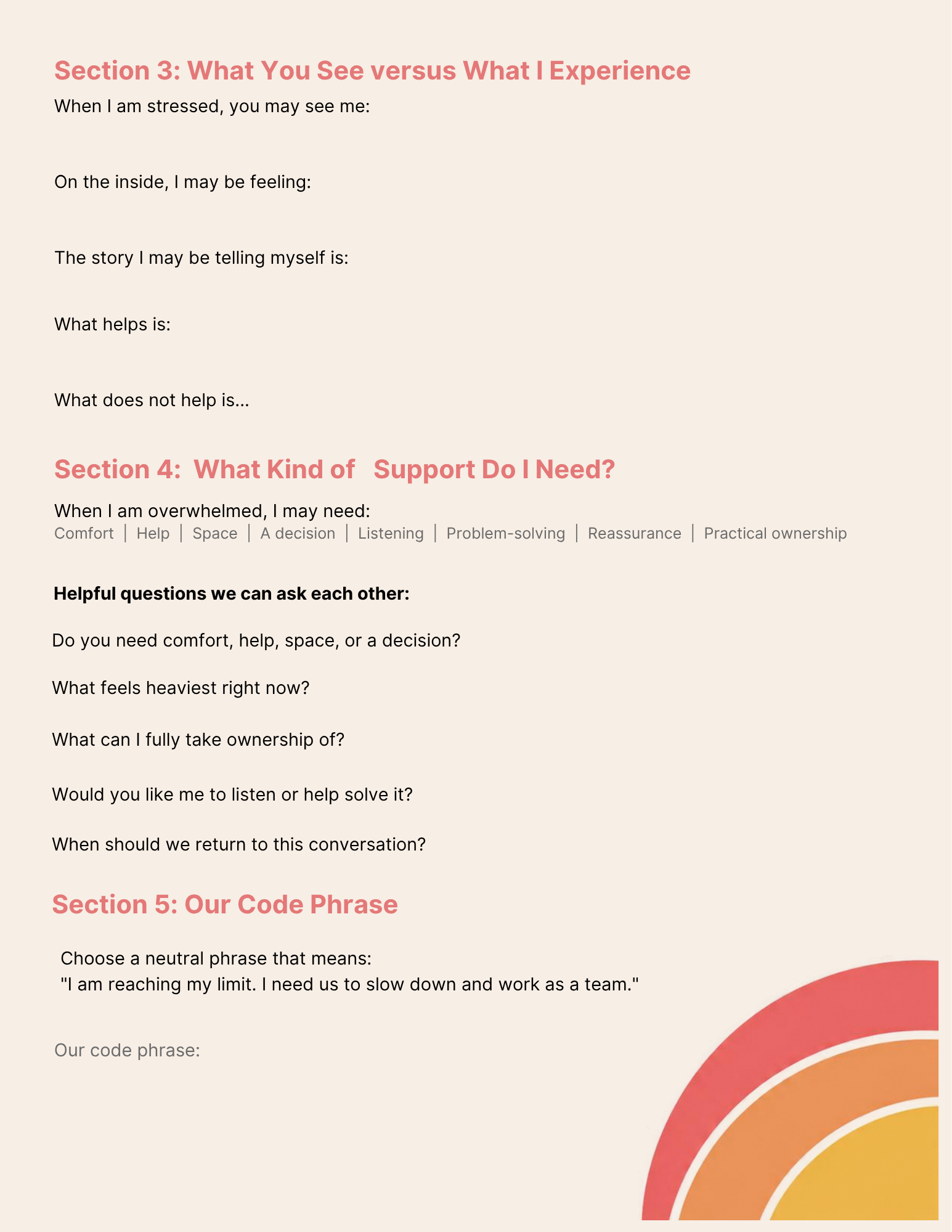
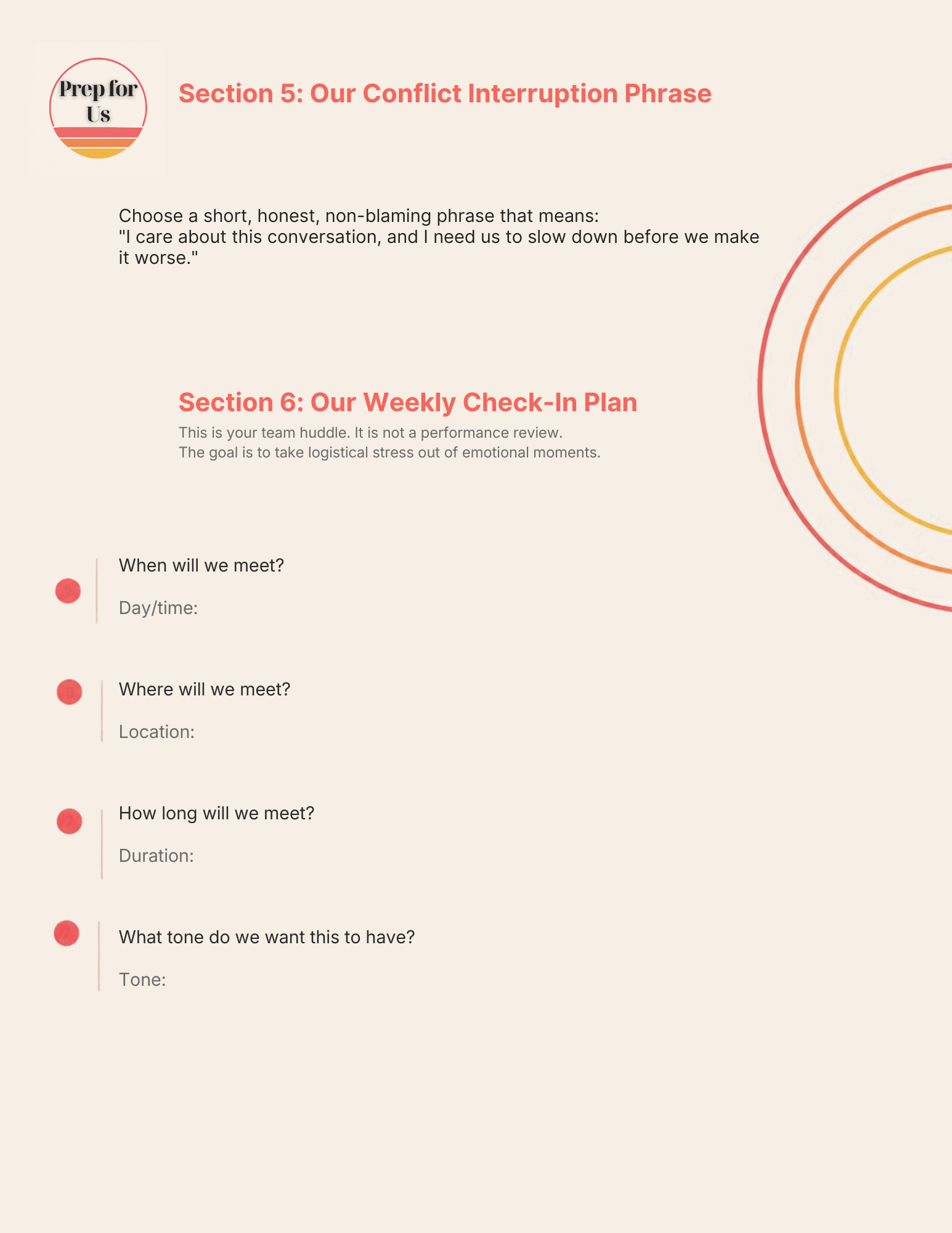
This isn't another course you watch and forget.
You'll actually sit down, talk, and make decisions together.
Every session gives you a short teaching, guided reflection prompts, and a practical next step.
Some prompts will help you recognize dynamics already happening in your relationship.
Some will uncover expectations you've never actually said out loud.
And some will help you create agreements you can come back to when you're exhausted, overwhelmed, or unsure what the other person needs.
For example:
Who is responsible for noticing when something needs to be done, not just doing it once they're asked?
When one of us is overwhelmed, what actually helps us feel supported?
How will we recognize when our relationship is getting the leftovers of our energy?
What does meaningful rest look like for each of us, and how will we protect it?
You'll leave each session with more than information.
You'll leave with shared language, a better understanding of your partner, and an actionable plan for what comes next.
Six sessions. Six opportunities to build a stronger foundation.
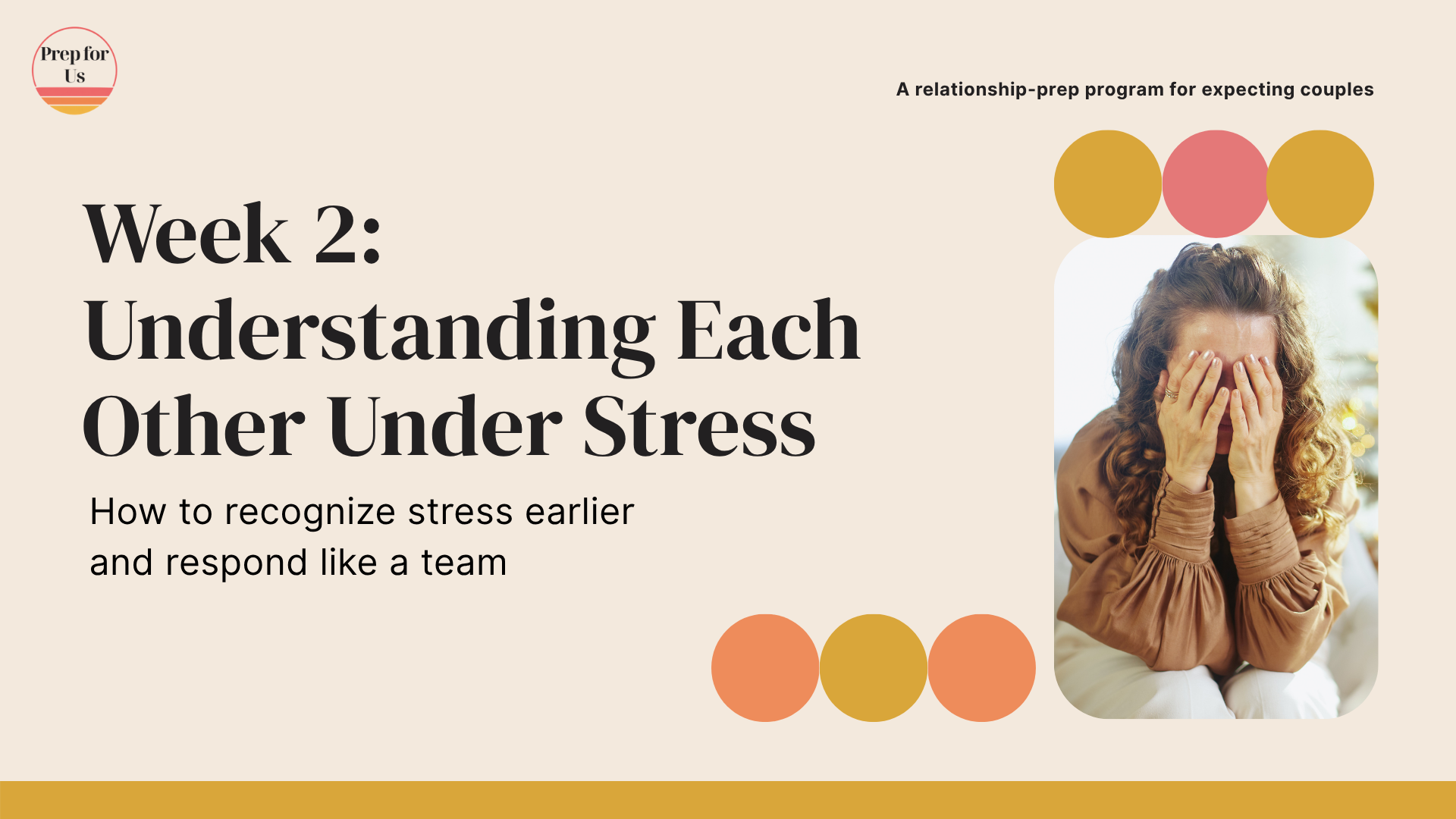
01 — Your Foundation
Get clear on your values, expectations, and the kind of family life you want to build
together.
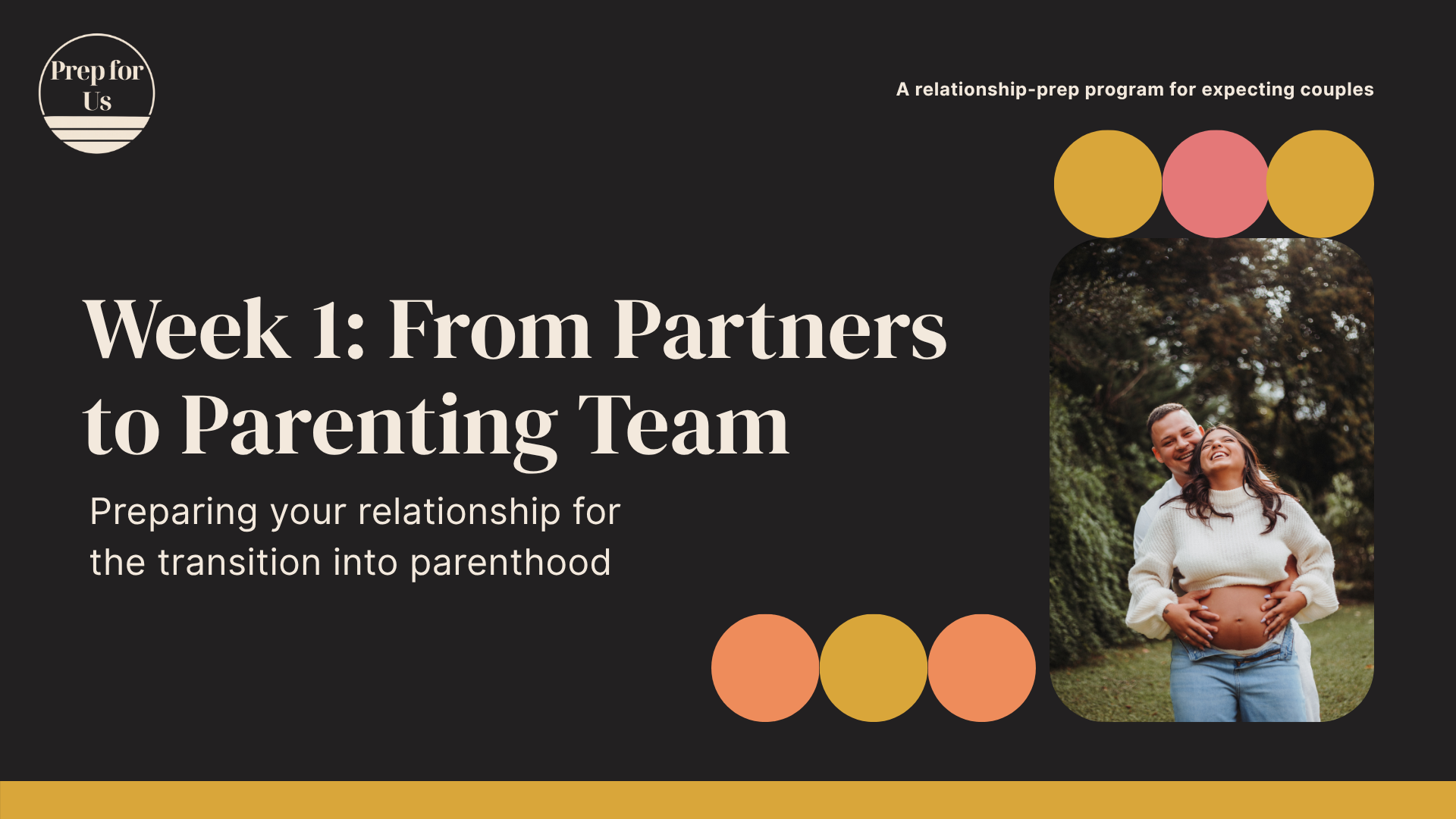
02 — Stress & Emotional Regulation
Understand your different stress responses and learn how to support each other without one person becoming responsible for managing everyone's feelings.
03 — Mental Load & Shared Responsibility
Make the invisible work visible and move from a manager-and-helper dynamic toward shared ownership.
04 — Communication & Repair
Learn to express needs, navigate difficult conversations, and create a weekly check-in that keeps small frustrations from quietly growing.
05 — Intimacy & Connection
Prepare for changes in desire, touch, affection, identity, and connection without turning intimacy into another obligation or area of resentment.
06 — Your Postpartum Partnership Plan
Create a realistic plan for sharing responsibilities, recognizing overwhelm, asking for support, and staying on the same team after baby arrives.

Why I made this for you.
Hi, I'm Chels.
I'm a mom of two, the founder of Postpartum Together, and a relationship coach who's spent more than six years helping new parents find their way back to one another.
But long before I was coaching couples, I was a new mom trying to understand why everything felt so different.
I remember the whiplash of becoming a parent.
How quickly my role in my family, in my relationship, and in the world seemed to shift.
Suddenly there were needs to anticipate, decisions to make, and responsibilities I didn't even realize someone had been carrying.
And the early days were so consuming that I barely had room to process any of it.
I didn't stop loving my partner.
I didn't stop wanting a connected relationship.
But becoming parents had changed our day-to-day lives faster than we'd changed the way we worked together.
Over the years, I've heard versions of that story from hundreds of parents.
Different families. Different circumstances. Surprisingly familiar conversations.
One person feels alone in the responsibility.
The other feels like nothing they do is ever right.
Both feel misunderstood.
And somewhere underneath the arguments, they still want to feel like a team.
I created Prep for Us because I don't think couples should have to wait until they're resentful, disconnected, or desperate to learn how to navigate parenthood together.
You can start having those conversations now.
And I want to help you do it.

It's time to prepare for more than the baby.
The baby registry can help you figure out what to buy.
The birth class can help you understand labor.
Prep for Us helps you prepare for the relationship you'll rely on through all of it.
Prep for Us — Self-Guided
$199 $97 one-time
Your purchase includes:
All six relationship preparation sessions.
Guided reflection workbook and conversation prompts.
Practical relationship and postpartum planning exercises.
Self-paced access so you can work around your schedules.
A clear starting point and instructions for moving through the experience together.
Plan for approximately 45–60 minutes of couple time per session.
No appointments to schedule. No weekly meeting with a coach. Just meaningful time invested in each other.
Instant access after purchase.
Your relationship deserves the same attention you're giving everything else.
You don't need to predict every hard day.
You don't need to have parenting completely figured out.
And you certainly don't need a perfect relationship before your baby arrives.
But you can go into this transition knowing how to talk about the hard things, share the responsibilities, support each other through stress, and recognize when it's time to reconnect.
Because your baby isn't the only new beginning worth preparing for.

The Prep for Us Partnership Promise
Work through all six sessions together. Complete your relationship check-in before and after the program.
If you don't notice improvement in at least five of the ten measured areas, you can request your $97 back within 60 days of purchase.
The Prep for Us Partnership Promise
Work through all six sessions together. Complete your relationship check-in before and after the program.
If you don't notice improvement in at least five of the ten measured areas, you can request your $97 back within 60 days of purchase.
Prep for Us FAQs
-
Staying connected after having a baby doesn’t happen automatically. Emotional disconnection after baby is common because exhaustion, feeding schedules, and mental load imbalance take over. The key is building connection systems before you’re overwhelmed.
That includes micro-connection rituals (10-minute check-ins), clear division of labor, and a shared repair process for conflict. Most couples don’t drift because they stop caring. They drift because they stop intentionally connecting.
Preparing your relationship for baby means deciding now how you’ll prioritize each other when time and energy are limited. Structure protects connection when emotions run thin.
-
Yes. It’s very normal to fight more during pregnancy. Stress increases. Roles start shifting. Fears about finances, parenting styles, and lifestyle changes surface.
Pregnancy often exposes existing communication patterns. Small disagreements can feel bigger because they represent future worries. Many couples experience tension around mental load, decision-making, or intimacy changes during pregnancy.
The goal isn’t to eliminate conflict. It’s to understand your pattern and build a repair process. That’s what prevents normal stress from turning into postpartum resentment later.
-
Common relationship problems after baby include mental load imbalance, sleep deprivation conflict, emotional disconnection, and intimacy changes after baby.
One partner often becomes the “default parent” or project manager of the home. Division of labor becomes unclear. Small frustrations feel personal because everyone is exhausted. Physical intimacy shifts due to hormones, healing, and stress.
None of this means your relationship is failing. It means the structure hasn’t adapted yet. Preparing your marriage for a newborn helps you prevent these predictable stress points from becoming long-term resentment.
-
Couples should seek help during pregnancy if they notice recurring arguments, anxiety about division of labor, fear of postpartum resentment, or concerns about staying connected after baby.
You don’t have to be in crisis. In fact, coaching before baby works best when things are mostly good but you want clarity and structure. If you’ve said, “We’ll figure it out when we get there,” that’s usually a sign it’s time to prepare.
Proactive couples coaching before baby reduces the risk of emotional disconnection and helps you enter parenthood as a team.
-
Couples therapy is ideal when there’s betrayal, trauma, addiction, or deep unresolved pain. Therapy often focuses on healing the past.
Coaching is forward-focused. It helps you prepare your relationship for baby by building systems, communication tools, and shared expectations. It’s practical, structured, and centered on action.
If you’re not in crisis but want to prevent common relationship problems after baby, coaching can be the right fit. Many couples even do both — therapy for deeper healing and coaching for implementation and accountability.
-
It’s common for one partner to feel more motivated than the other. Skepticism usually comes from fear of blame or the assumption that this means something is “wrong.”
When framed as preparation — not fixing — most partners become more open. Preparing your marriage for a newborn isn’t about criticism. It’s about reducing stress, clarifying mental load, and protecting intimacy after baby.
Often the skeptical partner becomes the most engaged once they see this is practical, structured, and focused on teamwork — not fault.
-
That’s exactly who this is for. Strong couples don’t assume love will carry them through sleep deprivation and identity shifts. They prepare.
Even healthy relationships can struggle with mental load imbalance or emotional disconnection after baby if expectations aren’t clear. Coaching during pregnancy strengthens what’s already working and reinforces weak spots before pressure hits.
Think of it like training before a marathon. You’re not injured. You’re preparing for intensity.
-
Intimacy changes after baby are normal. Hormones shift. Bodies heal. Energy drops. Emotional connection becomes even more important.
Many couples struggle because they don’t talk about expectations beforehand. Pressure builds quietly. One partner feels rejected. The other feels overwhelmed.
Preparing your relationship for baby includes creating pressure-free intimacy expectations and a realistic reconnection path. When you normalize the transition and communicate clearly, intimacy becomes something you rebuild together — not something you argue about.