From Rupture to Repair: How Couples Grow After Baby
The first year (or two) after bringing a baby home can feel like riding a roller coaster — exhilarating, beautiful, exhausting, and full of surprises. Many couples report deep love mixed with deeper tension. The good news? Conflict doesn’t have to mean collapse. Repair can become your growth edge.
In this post, we’re unpacking why couples drift after baby, how repair changes the trajectory, and what tools and research-backed practices can help you build safety, intimacy, and teamwork.
The Reality: Many Couples Experience Declines in Relationship Satisfaction Post-Baby
A recent meta-analysis found that marital satisfaction declines moderately from pregnancy to 12 months postpartum, and continues a bit into months 12–24.
Some studies report that 2/3 of couples say their relationship takes a hit for up to three years after having a baby.
Longitudinal research shows that anywhere from 20% to 59% of couples show marked declines in functioning after birth; others either remain stable or even improve.
The transition to parenthood is rarely neutral — but it’s not inevitable that things worsen if adaptive processes (communication, repair, support) are strong.
On physical/emotional strain: In one study, 42.8% of women reported relationship problems in the first 12 months postpartum; 16.9% experienced some form of intimate partner abuse.
All that to say: You are not alone. What differentiates couples who drift and those who grow is less about avoiding rupture and more about how consistently they repair.
Why repair matters (and what the research says)
In Dr. John Gottman’s work, failure to repair (i.e. letting ruptures linger) is a stronger predictor of marital dissatisfaction and divorce than the presence of conflict itself.
Repair attempts are often subtle, even hidden — but when couples can recognize them and accept them, conversations stay manageable.
Gottman notes that how a repair is delivered doesn’t always determine its success—sometimes clumsy repair attempts are accepted, sometimes elegant ones fail — what matters most is that the intention is there.
In your podcast conversation, you spoke about “rupture happens automatically, repair doesn’t.” That’s exactly the dynamic many couples don’t realize. The moment things diverge — tone, misinterpretation, overload — rupture often happens beneath the surface. Deciding to step back in is the act of repair.
What repair looks like: Practical tools & phrases
Here are some repair strategies you can share with listeners:
Code words / stop phrases
E.g. “Giraffe ballet,” “Pause for 60,” “Tap out.”
Purpose: to say, “I’m overheated; I want to come back better.”
“I feel / I need” statements
“I feel hurt / defensive / pressured / scared.”
“I need a moment to breathe.”
These shift you away from blame to internal experience.
Apology + ownership (even partial)
“I overreacted. I’m sorry.”
“I want to try that again.”
Owning even a sliver shifts the field.
Curiosity / invitation to explain
“The story I’m telling myself is ____. Can you help me understand what you meant?”
This keeps the loop conversational rather than adversarial.
“Let’s revisit this”
Agree on a time to return with cooler hearts.
Helps avoid "kitchen sink" explosions.
Repair gestures
A touch, eye contact, a calming phrase: “I want us.”
Mental Load, Emotional Connection, Intimacy & Identity
Mental Load: The Invisible Pull
“Mental load” refers to the cognitive and emotional effort it takes to track, plan, initiate, and manage household and childcare tasks.
A very recent working paper (“Beyond Time: Unveiling the Invisible Burden of Mental Load”) finds that women disproportionately carry this load, even when the time spent isn’t vastly different — because the responsibility/anticipation counts more than the act.
Example stories:
Story A: Julia handles doctor appointments, purchase lists, school planning. Her husband says, “Just tell me what to do.” Over time she feels unseen.
Story B: Marcus doubts whether to unload the dishwasher; his wife gets frustrated but she never asked him to unload it that night. Resentment builds in the gaps.
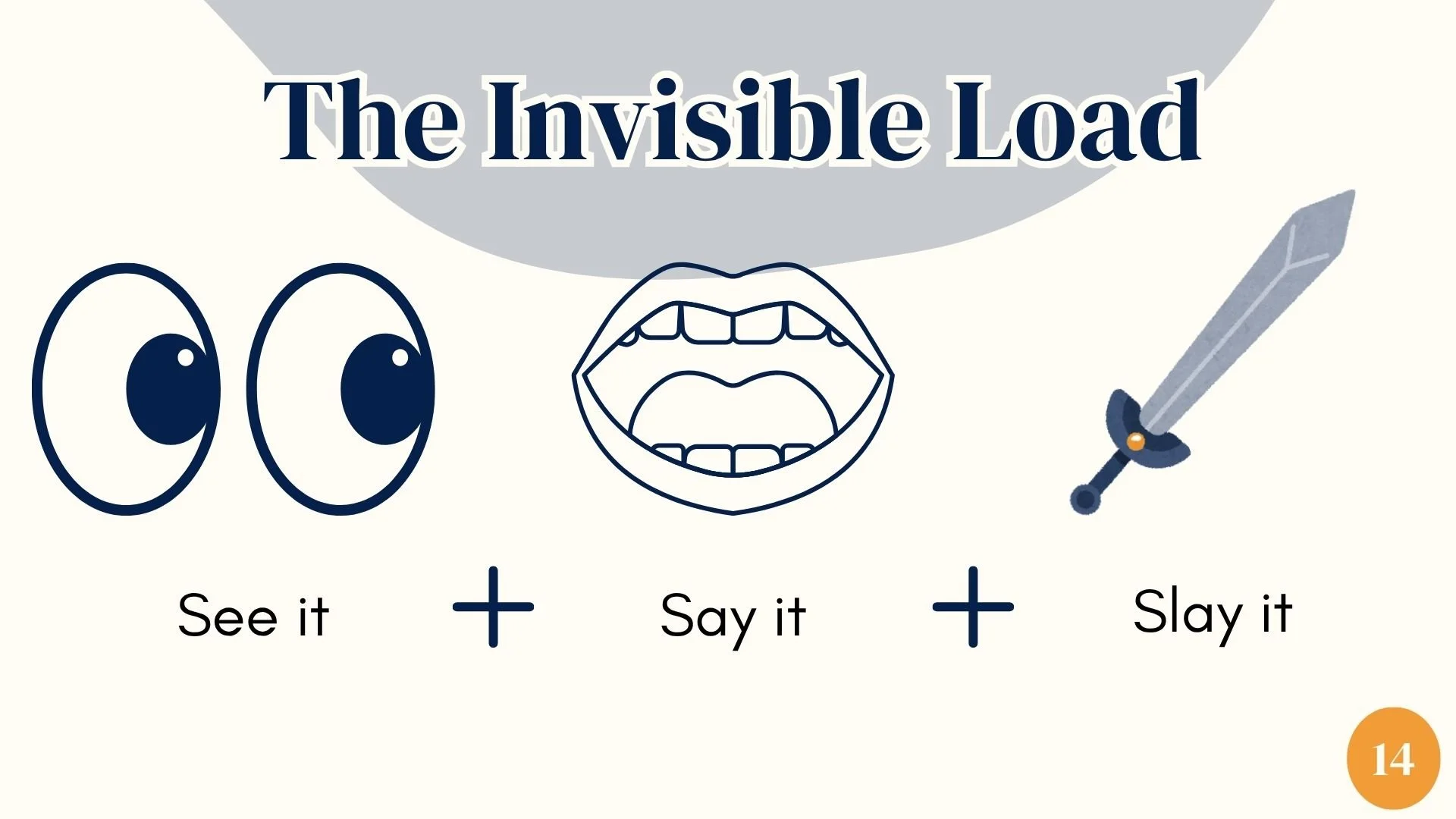
The shift: “See it, say it, slay it.” Make the invisible visible → talk it → distribute intentionally.
Emotional Connection & Co-regulation
When you add in sleep deprivation, big transitions, and hormone changes, it’s no surprise your body leans toward fight, flight, or freeze. And when you’re in survival mode, closeness with your partner feels harder to access.
Connection doesn’t just “happen.” You have to create it on purpose. That can look like quick check-ins, a hand on the shoulder, a shared rhythm before bed, or any small anchor that tells your nervous systems, we’re safe here.
What’s fascinating is that studies show a ripple effect: when one partner feels supported in parenting today, both partners usually feel more connected the next day. And it works the other way around, too.
That cycle reminds us that it’s the little things — not grand gestures — that keep the connection alive.
Intimacy Beyond Sex
Postpartum brings a lot of changes — your body, hormones, sleep, and even your sense of self. It’s no wonder many couples find themselves disconnected from sex during this season. In fact, plenty of women report challenges like low desire, discomfort, or just feeling touched out. But intimacy is so much bigger than sex. It’s the playful touch in the kitchen, holding hands on the couch, late-night talks, and letting yourself be vulnerable. Instead of asking, “Why aren’t we having sex?” try asking, “How are safety, belonging, and desire showing up for us right now?” That shift opens the door to real closeness, in whatever form feels right for you both.
Identity & Quiet Grief
Becoming a parent often means saying goodbye to parts of your old self socially, professionally, and personally. There’s a quiet grief in losing spontaneity, independence, or even feeling at home in your own body. That grief is normal. What helps is naming both sides of the experience: “I miss ___, and I’m excited about ___.” When you share that out loud, your partner gets to see the full picture of who you are becoming, which keeps you connected instead of drifting apart.
How This Episode + This Coaching Work Together
We taught communication and mental load at Babies & Bumps. But this podcast — and coaching — is your deeper dive into all 5 pillars:
Communication & repair
Mental load & fairness
Emotional connection & regulation
Intimacy & sexual rhythm
Identity & evolving vision
We don’t just drop ideas, we help you implement them for your specific relationship dynamic.
What You Can Do This Week
Now it’s your turn to try this in your own relationship. These prompts are gold, so grab a quiet moment and ask each other:
“What’s one part of our life you hope we protect after baby comes?”
“When you picture us a year into parenthood, what’s one thing you still want us to enjoy together?”
“What’s one invisible task you carry that I don’t usually see?”
And don’t just stop there. Choose one repair tool from above and practice it this week — maybe it’s creating a silly code word, using “I feel” statements, or agreeing on a time to circle back when you’re both calmer. These little shifts create big change when you do them consistently.
Invitation: From Listening to Transformation
This blog post, podcast, and these insights are your compass. But transformation happens when we apply them to your story.
If you felt resonance — tension in your relationship, yearning for deeper connection, fear of drifting — know you don’t have to go it alone.
Our next Prep for Us cohort launches October 6. We’d love to walk with you: To help you map your patterns, strengthen your repair muscles, protect your emotional safety, and preserve you and us through this transition.
👉 Book a Connection Call Here
(We’ll talk through your story, see if this is a good fit, and get clear on your next steps.)
