Holiday Planning With a Baby: How to Plan Holidays Without Burnout
Before kids, the holidays felt busy.
After kids, the holidays feel like project management.
Suddenly, you’re not just showing up to dinner. You’re thinking about nap schedules, overstimulation, packing lists, gifts, family expectations, travel timing, emotional dynamics, and whether your baby will melt down in the middle of your aunt’s living room while everyone watches.
It’s not that the holidays are bad.
It’s that the mental load of the holidays multiplies when you become a parent.
Most couples don’t struggle during the holidays because they don’t love each other.
They struggle because no one ever taught them how to plan a season like this as a team.
So instead, one person becomes the project manager of December… and the other person doesn’t even realize a project manager exists.
This guide will walk you through the biggest categories of holiday planning for new parents so you can share the load, reduce stress, and actually enjoy this season together.

1. Home & Hosting: The Invisible Work Behind “Having People Over”
Hosting isn’t stressful because you’re doing it wrong.
It’s stressful because you’re doing it tired, with a baby, while carrying a workload no one else can see.
Home and hosting includes:
Planning meals
Grocery shopping
Prepping food
Cleaning
Decorating
Preparing guest spaces
Managing baby schedules during gatherings
Anticipating everyone’s needs
Creating the “holiday atmosphere”
Research shows that one partner often carries significantly more anticipatory tasks during family gatherings… the planning work that no one sees but everyone benefits from.
A Tool That Makes Hosting Easier: The “Good Enough Holiday Home” Agreement
Sit down together and sort everything into three buckets:
Must Do – What actually matters
Would Be Nice – Only if there is time/energy
Not This Year – Traditions that can wait
Most holiday resentment comes from unspoken expectations, not the work itself.
When couples agree on what “good enough” looks like, the pressure drops immediately.
2. Family Logistics & Coordination: The Category That Quietly Drains Everyone
Holiday logistics are the “in between” pieces that make everything run:
Travel plans
Nap schedules
Packing lists
Gift exchanges
RSVPs
Communication with family
Food coordination
Overnight plans
Weather backup plans
Timing everything correctly
Individually, none of these seem huge. Together, they become a full-time mental job.
Research shows that coordination labor is one of the biggest predictors of resentment in couples with young children, because it requires constant anticipating, planning, and remembering.
This is why couples don’t fight about “drive time.”
They fight because one person is holding the entire plan in their head alone.
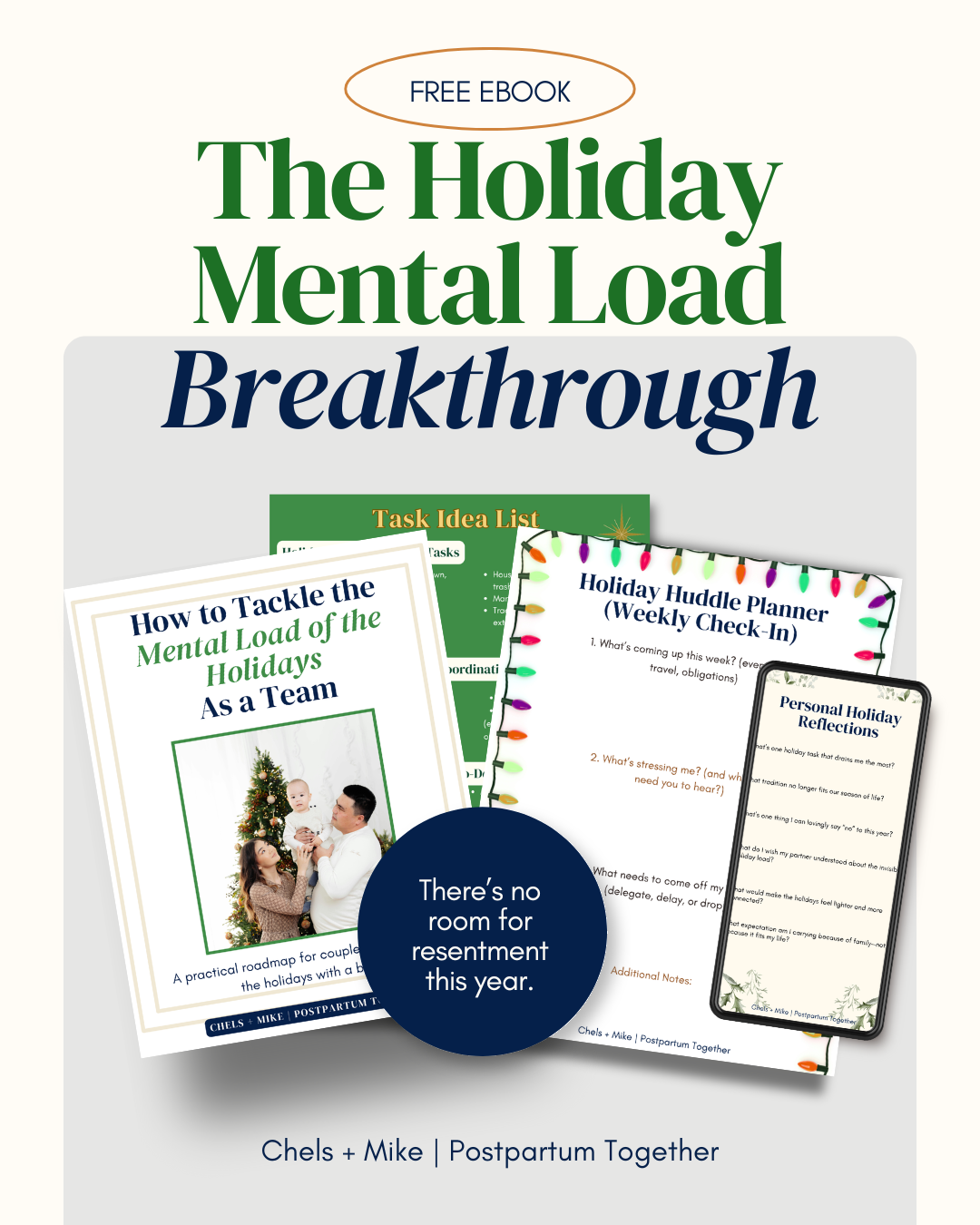
Click image for instant download! (No email required)
3. Events & Seasonal To-Dos: When December Becomes a Conveyor Belt
This is the part where December starts to feel like:
School programs
Holiday parties
Santa visits
Gift exchanges
Neighborhood events
Church or community events
Family gatherings
Traditions
Photos
Baking
Decorating
And with a baby, every event now requires:
Packing
Timing naps
Planning exits
Managing overstimulation
Recovery time afterward
Many families are not exhausted because of the holidays themselves — they’re exhausted because they are overscheduled and under-communicated.
The Question That Removes Half Your To-Do List
Ask each other:
“What memories are we actually trying to make?”
“What are we doing because we feel like we should?”
That question alone removes guilt, pressure, and unnecessary events.
Your family values should run the calendar — not the other way around.
4. Emotional Labor & Expectations: The Invisible Work Underneath Everything
Emotional labor is the invisible work of:
Managing family dynamics
Keeping the peace
Anticipating tension
Protecting boundaries
Managing disappointment
Monitoring kids’ emotional states
Regulating your own nervous system
Making sure everyone “feels okay”
One partner often becomes the emotional barometer for the entire holiday season — scanning the room, anticipating reactions, and absorbing tension.
Emotional labor activates real stress responses in the body, which is why it feels so exhausting.
A Tool: Emotional Non-Negotiables
Before gatherings, talk about:
What feels emotionally heavy
What boundaries matter
What you need from your partner
What might be triggering this year
When emotional labor is named, it becomes shareable instead of silent.

5. Self & Sanity: The Category No One Plans For (But Everyone Needs)
New parents are already living at the edge of their bandwidth.
Then December adds more of everything:
More events
More noise
More expectations
More decisions
More pressure
Your load increases.
Your capacity does not.
That’s why this category matters so much.
The Tool: One Non-Negotiable + One Bailout Plan
Your Non-Negotiable:
One thing that keeps you grounded (quiet coffee, walk, alone time, early bedtime, etc.)
Your Bailout Plan:
What you and your partner will do when things go sideways (leave early, take a break, switch shifts, reset conversation).
When you plan for your well-being, the whole season becomes more manageable.
6. Gifts & Special Extras: The Category That Quietly Becomes a Full-Time Job
Gifts are not just gifts anymore.
They are:
Budgeting
Wish lists
Coordinating with family
Preventing duplicate gifts
Stockings
Wrapping
Shipping deadlines
Matching pajamas
Memory gifts
Teacher gifts
Neighbor gifts
Gift logistics often become a massive mental load for one partner.
The Tool: The 3 Gift Lanes
Lane 1: Mandatory Gifts (kids, parents, siblings, teachers)
Lane 2: Optional Gifts (friends, neighbors, extended family)
Lane 3: Special Extras (stockings, memory gifts, traditions)
Then assign lanes — not tasks — so one person is not managing everything.
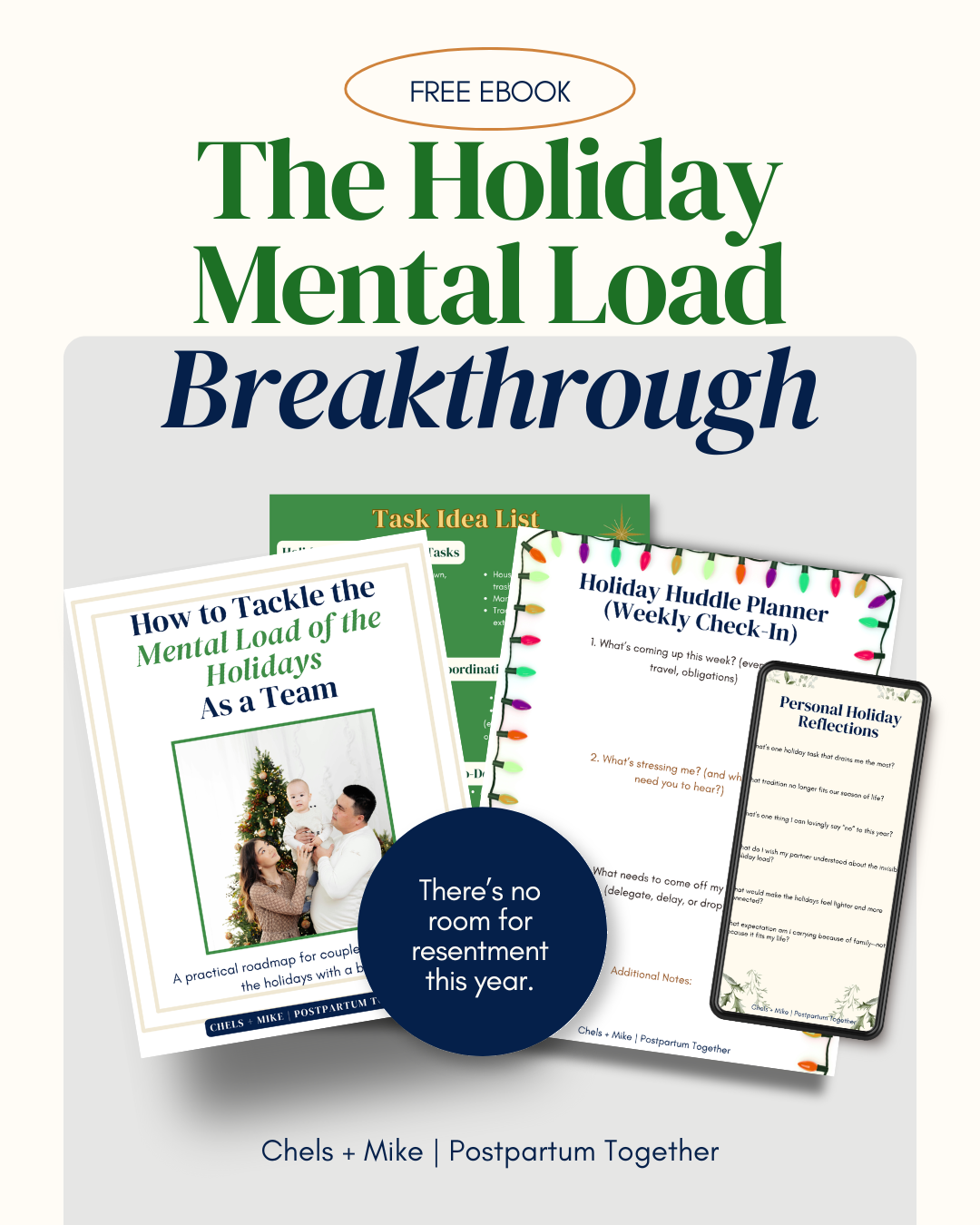
Click image for instant download.
7. The Weekly Holiday Huddle: The 10-Minute Meeting That Prevents Most Holiday Fights
Once a week, sit down and ask:
What’s coming up this week?
What’s stretching us?
What needs to come off our plates?
What are our roles?
This one conversation turns holiday chaos into a shared plan instead of a guessing game.
Most couples don’t need perfect holidays.
They need aligned holidays.
8. Mixed Emotions During the Holidays Are Normal
The holidays bring:
Joy and exhaustion
Gratitude and grief
Love and overwhelm
Nostalgia and pressure
And couples often don’t feel the same emotions at the same time, which can cause misunderstandings.
The Tool: Name + Ask
Name what you’re feeling.
Ask for what you need.
Emotional honesty reduces conflict and increases connection.
9. Designing Holidays That Actually Fit Your Family
You are allowed to design holidays that fit your life now — not your childhood, not your parents’ expectations, and not Instagram.
You get to choose:
What matters
What stays
What goes
What traditions you keep
What traditions you create
Families that feel connected during the holidays are not the ones who do everything.
They’re the ones who:
Talk honestly
Plan together
Support each other
Adjust expectations
Protect their capacity
Choose connection over perfection
You don’t need a perfect holiday.
You need a holiday that fits your family.
A Simple Holiday Planning Framework for Couples
If this feels like a lot, start here:
The Holiday Planning Framework:
Make the invisible visible
Divide responsibilities by category
Do a weekly Holiday Huddle
Protect each person’s capacity
Expect mixed emotions
Choose what matters most
Delete the rest
That’s how couples move from:
Overwhelmed → Aligned
Resentful → Supported
Rushed → Connected
Where to Start
If you want one place to start, start here:
Write down everything that has to happen this holiday season
Divide it by category
Assign who is leading each category
Do a weekly 10-minute check-in
Protect each other’s energy
Lower expectations
Choose connection over perfection
Because the goal of the holidays isn’t to impress everyone.
It’s to protect your relationship, your family, and your peace while you move through a very full season.
And that gets a lot easier when you stop carrying the entire holiday in your head alone.
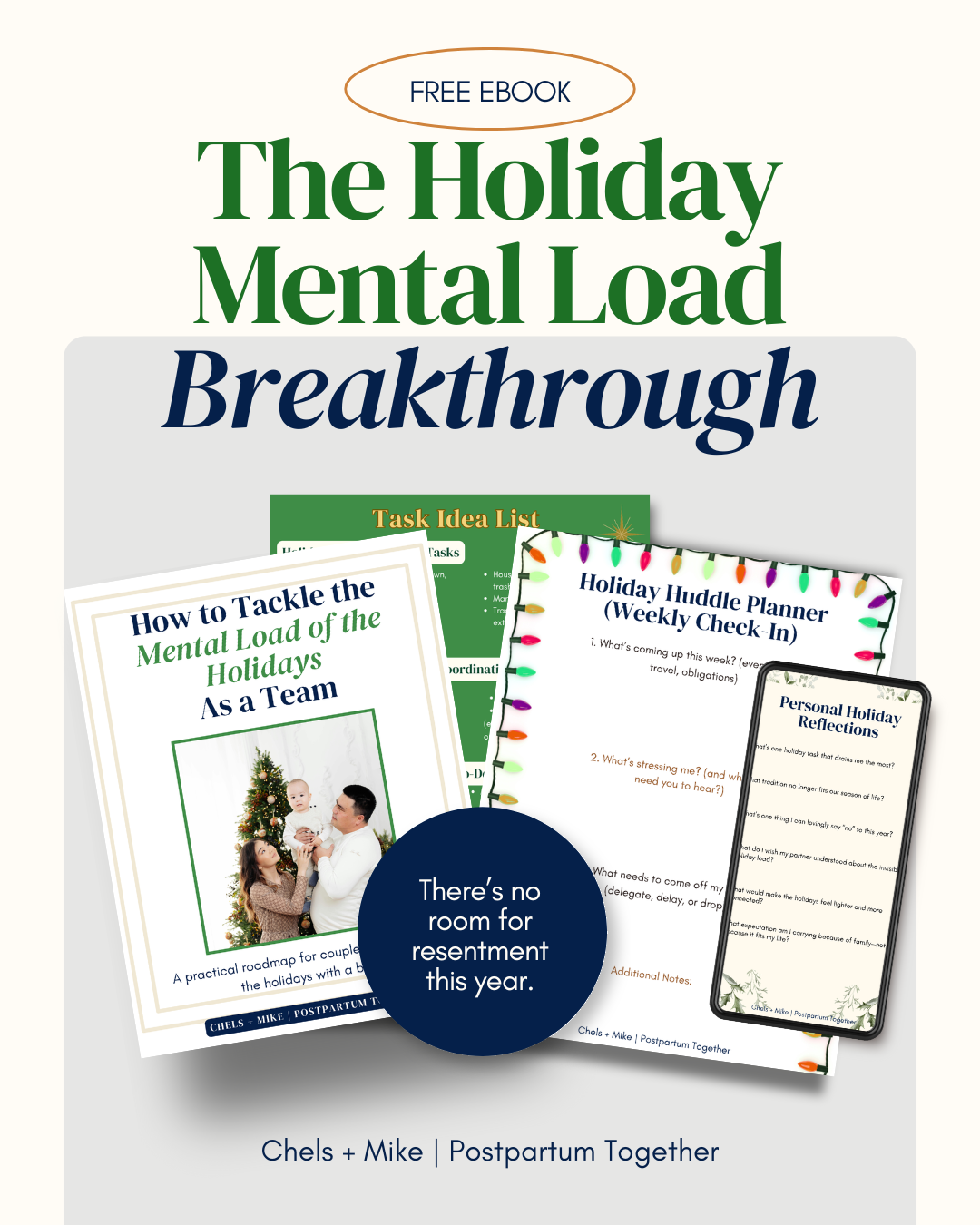
Holiday Planning With a Baby FAQ
How do you plan holidays with a baby?
Start by writing down everything that needs to happen, divide responsibilities by category, lower expectations, and do a weekly planning check-in as a couple.
Why are the holidays so stressful for new parents?
The holidays add extra planning, travel, gifts, and family expectations on top of an already demanding season of life. Many new parents also carry the mental load of planning, which leads to burnout and resentment.
How do you divide holiday responsibilities fairly?
Divide responsibilities by category (gifts, travel, meals, scheduling) instead of individual tasks. When one person owns a category, the mental load is shared more evenly.
What should you not do during the holidays with a baby?
Avoid overscheduling, trying to meet everyone’s expectations, and assuming you and your partner have the same priorities. Talk about what matters most and drop the rest.
How do you avoid burnout during the holidays as a parent?
Lower expectations, plan together weekly, protect rest time, and focus on connection instead of perfection.
