Holiday Mental Load Series: Day 5 — Self & Sanity
Why this overlooked category matters most for new parents (and how to protect your energy).
There’s a holiday category almost no one prioritizes — but absolutely everyone needs.
Especially new parents.
Self and sanity.
Every other category in this series matters. But none of them matter more than this one. Because if you’re running on fumes, everything else becomes harder: the logistics, the hosting, the emotional labor, the to-dos, the travel, the expectations. All of it.
And let’s name the truth your nervous system already knows:
The holidays hit different when you’re a new parent.
Why This Category Gets Ignored — and Why It Can’t Anymore
New parents are already living at the edge of their bandwidth. You’re touched out, overstimulated, sleep-deprived, and managing a constant stream of decisions, emotions, and responsibilities. Then December shows up with:
extra events
extra noise
extra travel
extra expectations
extra planning
extra pressure to “make it magical”
It’s a lot before you even add the mental load of:
“What does the baby need?”
“What will keep us regulated?”
“How are we going to handle naps in all this chaos?”
A 2022 study in The Journal of Family Studies found that new parents experience a significant spike in stress and emotional exhaustion during the holiday season — not because they’re doing anything wrong, but because the load increases while their capacity doesn’t.
Your load has increased.
Your bandwidth has not.
That’s not failure. That’s reality.
Why Parents (Especially Moms) Sacrifice Themselves During the Holidays
Parents — especially mothers — tend to push their own needs to the edge of the list in December.
You want your kids to have sweet memories.
You want your family to feel supported.
You want to show up for traditions.
You want to be flexible, festive, grounded, and emotionally present.
But when you're running on empty?
No one gets the best version of you — including you.
Your body tells the truth long before you admit it:
irritability
low patience
overstimulation
emotional reactivity
resentment
mental fog
exhaustion that lingers for days
This is not because you’re weak.
It’s because you’re human.
Your well-being matters as much as everyone else’s holiday experience — and this category finally gives it space.
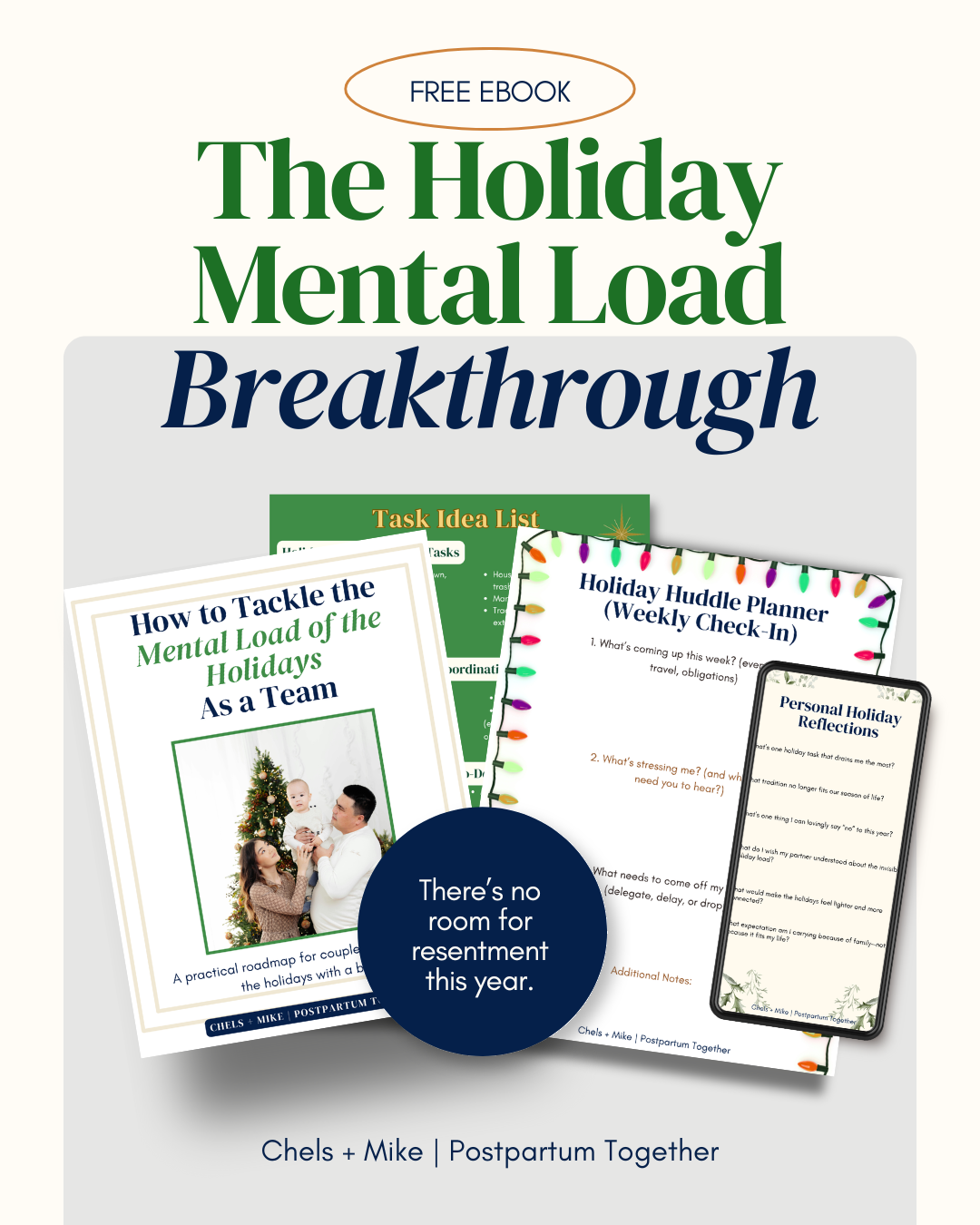
Click image for instant download
The Essential Tool for Day 5: One Non-Negotable + One Bailout Plan
Inside the Holiday Mental Load Breakthrough, we include a full section dedicated to this category, because without the anchors below, everything else collapses.
Your Non-Negotiable
Your non-negotiable is one thing you commit to in order to stay grounded.
Small. Simple. Stabilizing.
Examples:
a quiet morning coffee before the house wakes up
a protected 10–15 minute meditation
a walk around the block alone
yoga or stretching before bed
a midday reset in your bedroom with the door locked
declining events that drain you
no planning conversations after 9 p.m.
Your non-negotiable is the thing that keeps you from slipping into survival mode.
It doesn’t have to be big — but it must be consistent.
This is what allows your nervous system to come back online instead of running on pure adrenaline.
Your Bailout Plan
Your bailout plan is your reset button — the thing you and your partner agree to if (and when) things go sideways.
Because things will go sideways.
A bailout plan might be:
a break in the car before walking into an event
leaving early without guilt
stepping into the bedroom for 15 minutes during hosting
tag-teaming overstimulation
calling a “reset moment” after a hard interaction
pausing to restart a conversation that spiraled
This is your “if it goes wrong, here’s how we regroup” agreement.
It lowers the pressure because perfection is no longer the expectation.
You become partners, not performers.
And your body finally has permission to be human.
Why This Tool Works (The Science)
When you name what you need — and plan for what might go wrong — your brain shifts from reactive mode to intentional mode.
Research from The Journal of Positive Psychology shows that self-regulation increases dramatically when people:
Identify personal needs
communicate those needs clearly
have a plan for emotional overwhelm
Your nervous system relaxes when it knows there is a safety net.
Your partner can support you without guessing.
And the season becomes grounded instead of chaotic.
This is how couples move from “barely surviving December” to “feeling like a team again.”
How to Talk to Your Partner About Your Needs
When you share your non-negotiable and bailout plan, you’re not asking your partner to read your mind.
You’re giving them a roadmap.
That roadmap sounds like:
“Here’s what helps me stay regulated.”
“Here’s what I need when things get overwhelming.”
“Here’s how we’ll reset if it doesn’t go as planned.”
This is clarity — not selfishness.
This is a partnership — not pressure.
This is how you support each other’s humanity during a season that demands more from both of you.
Why the Self & Sanity Section Is Built Into the Holiday Mental Load Breakthrough
Because self-preservation is not a luxury.
It’s a requirement.
Inside the guide, you’ll find:
grounding questions
capacity assessments
communication prompts
sanity-saving resets
tools for navigating sensory overload
expectations clarifiers
self-support plans that fit your actual bandwidth
You don’t need to wait until you’re burnt out.
You can plan for your well-being with intention — not guilt.
Your Takeaway for Day 5
Protect the parts of the holiday that protect you.
This isn’t selfish.
It’s wise.
It’s needed.
It’s the difference between feeling present and feeling like you’re performing your way through December.
A calmer, more grounded holiday starts with a tank that isn’t empty — even if “full” feels like a big ask in this season.
You deserve breathing room.
You deserve support.
You deserve moments that feel warm, not overwhelming.
This is where you start.
If you haven’t yet, download the Holiday Mental Load Breakthrough.
Use the Self & Sanity section to name what you need, what you don’t, and how to maintain emotional bandwidth this season.
A more grounded December is possible — not because you’re doing more, but because you’re finally supporting yourself.
