Holiday Mental Load Series: Day 4 — Emotional Labor & Expectations
Why this invisible load drains new parents—and how to protect your energy this season.
There’s a part of the holiday mental load that sits underneath everything else.
A layer that most people never name, but every new parent feels:
Emotional labor and expectations.
This is the category that leaves people feeling on edge before they’ve even stepped through the door of a holiday gathering. It’s also one of the biggest predictors of burnout, resentment, and “holiday blues” for parents in their first few years with a baby.
And it makes sense.
Because emotional labor is the work no one sees—but everyone in the room benefits from.
Let’s break it down.
What Emotional Labor Actually Looks Like in December
Emotional labor is the invisible work of managing the emotional temperature of a space. It’s the scanning, anticipating, smoothing, softening, and absorbing that many parents—especially moms—have been conditioned to do since childhood.
During the holidays, emotional labor might look like:
predicting tension between relatives
managing overstimulation for the kids
keeping the peace so the day “goes smoothly”
navigating comments about your parenting choices
worrying about hurt feelings or disappointment
balancing everyone’s expectations for traditions
bracing for conversations you don’t have capacity for
protecting boundaries without creating a scene
trying to appear “fine” even when you’re exhausted
This is the invisible emotional scaffolding that holds holiday gatherings together.
And when you’re a new parent?
You’re doing all this while also trying to keep your baby calm, regulate your own nervous system, and carry the weight of sleep deprivation, postpartum shifts, and family dynamics that feel sharper than usual.
It’s a lot.
And you’re not imagining that heaviness.
Why One Partner Usually Carries This Load
In almost every couple we’ve coached, one partner becomes the emotional barometer for the entire season. Not intentionally. Not because the other is cold or disengaged. But because emotional labor is often learned, modeled, and gendered long before adulthood.
This partner becomes the one who:
feels responsible for the vibe
absorbs tension in the room
regulates everyone else’s emotions
anticipates potential meltdowns
senses disappointment before it’s spoken
preps for difficult conversations
tracks relational dynamics
carries guilt when someone is unhappy
If you’re the partner scanning the room, monitoring kids’ cues, and bracing for comments, your body is carrying emotional labor in real time. It’s work—physically, mentally, and neurologically.
Research published in American Sociological Review shows that emotional labor demands activate the same stress pathways as high-pressure workplace roles. Your nervous system isn’t “overreacting”—it’s doing exactly what it’s been trained to do.
Why Emotional Labor Becomes Overwhelming in Early Parenthood
Four reasons:
1. Your capacity is lower.
Sleep deprivation + postpartum changes mean your window of tolerance is smaller.
2. Your identity is shifting.
You’re navigating who you are now, what you value, and what matters for your family—not just the family you came from.
3. Your baby’s needs are constant.
You’re thinking about naps, feeds, sensory input, and transitions—all while managing the emotional climate.
4. Your boundaries matter more.
You physically and emotionally can’t stretch yourself the way you once did.
And that brings up guilt, fear, or old patterns of wanting to please others.
Emotional labor touches every part of your experience.
No wonder it feels heavy.
The Pattern We See in Most Couples
The partner carrying the emotional labor often walks into a gathering already tense. Already bracing. Already anticipating.
The other partner walks in thinking, “It’ll be fine.”
Neither is wrong.
But they’re working with two completely different scripts.
What happens?
A small comment hits harder than expected.
A boundary breach spirals into a shutdown.
One partner feels abandoned.
The other feels blindsided.
And a holiday that should have felt warm turns into emotional recovery for days.
This is why naming emotional labor changes everything.
It brings both partners onto the same page instead of living in two separate realities.
The Tool That Protects Your Emotional Energy: Emotional Non-Negotiables
Here’s the tool we want you to use before you walk into any holiday situation:
Name your emotional non-negotiables.
Sit down with your partner and talk through:
What feels emotionally heavy right now?
What are you anticipating?
What dynamics are you nervous about?
What boundaries matter most this year?
What past comments or interactions still sting?
What do you need from me if things feel off?
You don’t have to carry these concerns silently.
Saying them out loud reduces the emotional load almost immediately.
And for the partner who tends to miss emotional cues?
This gives them a clear roadmap for how to show up—not reactively, but proactively.
Letting Go of Expectations That Aren’t Yours
Emotional labor often comes from expectations—spoken or unspoken—from family, culture, or past tradition.
This year, ask yourself:
Who am I trying to impress?
Who am I afraid to disappoint?
Which expectations am I carrying because I was raised to?
Which expectations come from social media, not reality?
Which traditions actually matter to us in this season of life?
You can love your family and still have boundaries.
You can keep meaningful traditions and still let go of the ones that drain you.
You can choose what fits your current season—not the one people expect you to live in.
A holiday rooted in your values—not someone else’s—will always feel lighter.
How Couples Can Support Each Other During Emotional Labor
When you name the emotional load, it becomes shareable.
Your partner can:
help regulate you when your body spikes into stress
redirect conversations that feel draining
intervene when boundaries are crossed
take the lead when you need a break
validate your feelings instead of dismissing them
anticipate needs instead of reacting last-minute
reinforce decisions you made together
protect the energy of your small family
The emotional experience becomes a shared project—not a silent burden.
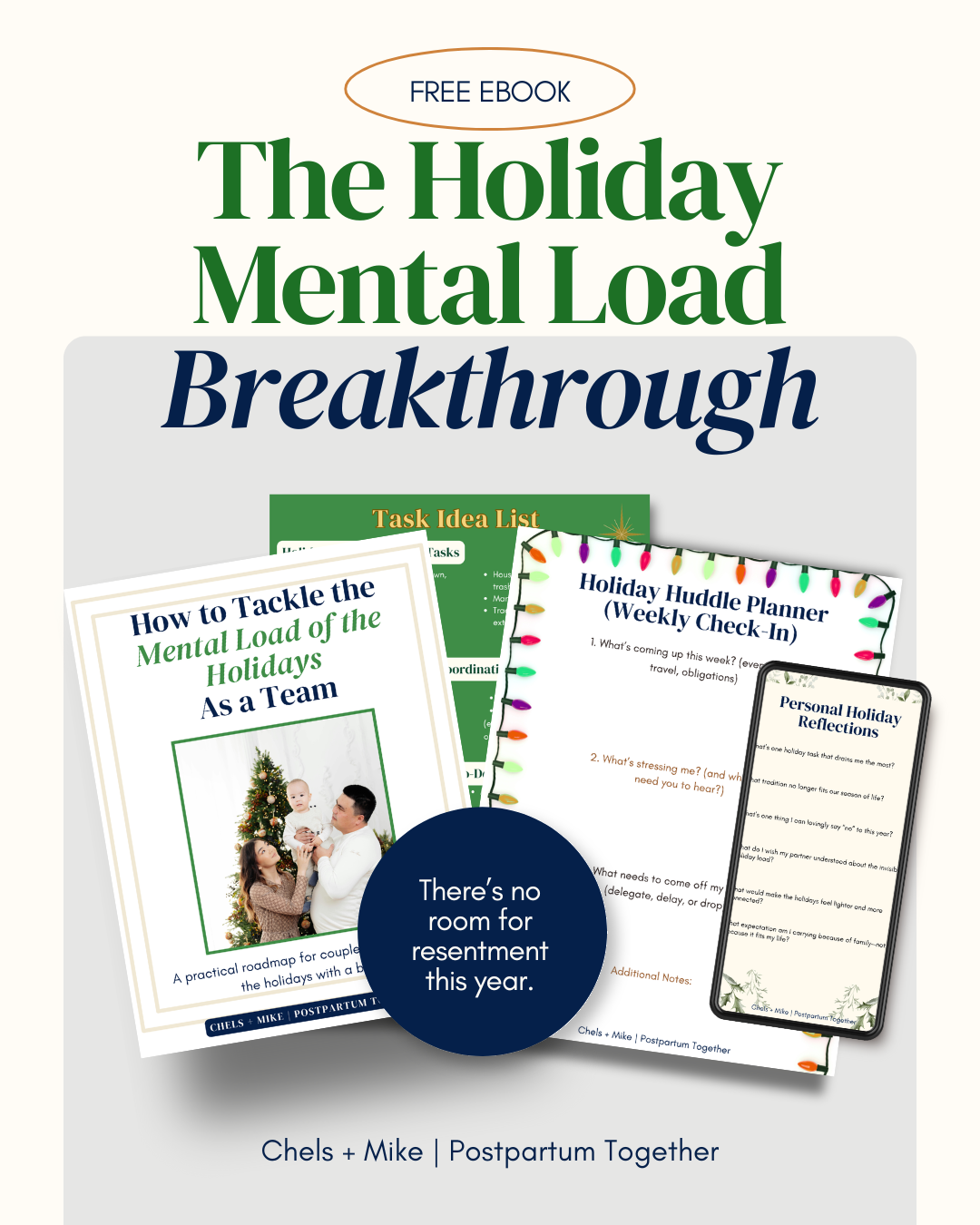
How the Holiday Mental Load Breakthrough Helps
Inside the guide, you’ll find:
emotional trigger prompts
expectation-setting worksheets
boundary questions
preparation checklists
values-based decision-making tools
partner communication prompts
These help you unpack the emotional load before you’re in the moment.
Because clarity lowers pressure—and pressure is what makes emotional labor feel unbearable.
Your inner world deserves space.
Your partnership deserves tools.
Your holiday deserves to feel settled, not stretched thin.
Your Takeaway for Day 4
You can’t control other people’s expectations.
But you can control your clarity, your boundaries, and your emotional bandwidth.
When you honor your emotional non-negotiables, the season becomes lighter.
The gatherings feel less charged.
Your relationship feels supported.
And you stop performing your way through December.
You get to experience it.
If you haven’t yet, download the Holiday Mental Load Breakthrough.
Use the emotional labor section to clarify:
what you’re anticipating
what matters most
which boundaries need protecting
how to show up as a united team
how to let go of expectations that don’t fit your life
Ten minutes of honest conversation now can save you weeks of stress and prevent the hidden emotional burnout so many new parents navigate alone.
Let’s build a holiday season that feels grounded, connected, and genuinely warm.
