Holiday Mental Load Series: Day 7 — Gift Logistics & Special Extras
Why gifting becomes a massive mental load for new parents (and how to simplify it without losing the magic).
Let’s talk about one of the sneakiest, heaviest parts of the holiday mental load—gift logistics and all the “special extras.”
On the surface, gifting seems simple.
Buy a few things. Wrap them. Call it done.
But every parent knows that’s not how it actually goes.
Gifts aren’t just gifts.
They’re emotional labor.
They’re financial planning.
They’re mental tabs, timing, communication, expectations, traditions, and invisible work all rolled into one.
And once you become a parent, this category explodes.
What used to be a quick stop at your favorite department store becomes a full-blown project management experience.
Let’s break it down and make it easier.
Why Gift Logistics Become So Heavy for New Parents
When you're child-free, gifting is flexible. Last-minute. Chill.
You buy something on the way to your parents’ house and call it good.
But once you have kids?
Everything becomes layered.
Gifting now includes:
Who needs gifts (family, kids, teachers, childcare providers, neighbors, coworkers)
What your budget actually is this year
Coordinating wish lists with grandparents, aunts, uncles, and friends
Preventing duplicate gifts (18 versions of the same toy happen fast)
Making sure items fit your values (no noisy toys, no choking hazards, no plastic avalanche)
Choosing developmentally appropriate things
Wrapping supplies
Stocking stuffers
Shipping deadlines
Emotional expectations
Matching pajamas
“Memory-making extras”
A 2021 survey in Money and Family Studies showed that gift-related decision-making disproportionately falls on mothers, especially during the holidays, and it directly increases stress levels and emotional burnout.
Gift logistics are a mental load.
Plain and simple.
And one partner usually becomes the Chief Gift Officer… who never applied for the role.
The Invisible Emotional Weight of Gifting
People don’t talk about this enough:
Gift giving carries emotional meaning.
You’re not just choosing items.
You’re trying to make people feel loved. Considered. Seen.
And new parents also juggle:
balancing your own childhood traditions with what you want now
wanting to avoid overstimulation and clutter
managing relatives’ expectations
guilt about not doing “enough”
comparison pressures from social media
sensory overload, exhaustion, and time scarcity
Gifts hold nostalgia, values, identity, pressure, and love.
No wonder this category feels like a lot.
Why the “Do We Have Anything for My Sister?” Comment Can Trigger Resentment
It’s truly not malicious when your partner asks this.
But what you hear is:
“Have you been doing this job I forgot existed?”
“Have you handled the load I haven’t been tracking?”
“Are we magically squared away because you’re the one who always thinks ahead?”
This is why gifting leads to bickering, shutdowns, or that familiar late-night CVS panic run.
Not because people don’t love each other.
But because the mental load is invisible until someone pokes it.
This is exactly why the Holiday Mental Load Breakthrough has a dedicated gifting section—to make the invisible visible and to turn chaos into collaborative clarity.

The Tool That Makes This Category Manageable: The 3 Gift Lanes Method
This method changes everything.
It simplifies the chaos and divides the labor in a way that feels fair—not frantic.
Lane 1: Mandatory Gifts
These are the people you must get gifts for based on emotional or social importance:
your kids
parents and in-laws
siblings
teachers
childcare providers
These gifts have weight. They matter.
Lane 2: Optional Gifts
People you want to appreciate, but not at the cost of your mental health:
neighbors
coworkers
friends
the mail carrier
extended relatives
These are flexible. If it happens, great. If not, also great.
Lane 3: Special Extras
These are the fun add-ons that make the season feel sentimental:
matching pajamas
memory-based gifts
homemade ornaments
“first Christmas” keepsakes
stocking stuffers
photo books
These can be beautiful—but they should not generate chaos.
Why Sorting Gifts Into Lanes Works So Well
Because not everything can matter equally.
Parents get burned out when every small item feels urgent and sentimental.
Sorting into lanes lets you:
prioritize what actually matters
delete what doesn’t
stop feeling guilty about skipping optional extras
stop trying to make everything magical
give your energy to the right things
Once gifts fall into lanes, the season gets lighter—fast.
Step 2: Assign Lanes (Not Tasks)
This is where teamwork kicks in.
Instead of saying:
“You buy for your mom, I’ll get my sister.”
“Can you just handle stockings?”
You assign lanes, which are bigger, clearer categories:
“I’ll lead Lane 1. You support.”
“You take Lane 2. I’ll back you.”
“Let’s split Lane 3 based on who cares about what.”
This removes decision fatigue.
This removes “mental tabs” that keep one partner up at night.
This removes last-minute resentment.
Because now, instead of one person being the gift coordinator for the entire world, you’re both carrying lanes that make sense for your strengths, time, and emotional bandwidth.
Budget Fights Drop Dramatically When Lanes Are Assigned
Nearly every couple who uses this tool tells me the same thing:
“We stopped fighting about money because we actually knew who was buying what.”
Because here’s the truth:
Most holiday budget blowups happen because one person is doing the work quietly, and the other is unaware of how much is actually being purchased.
Lanes create transparency.
Clarity prevents conflict.
Shared responsibility prevents resentment.
Your Takeaway for Day 7
Gift giving should be joyful—not stressful.
Share the load before you share the wrapping paper.
You’re allowed to simplify.
You’re allowed to set limits.
You’re allowed to say “not this year.”
You’re allowed to choose presence over perfection.
Your holiday memories deserve to feel warm—not heavy.
Download the Holiday Mental Load Breakthrough
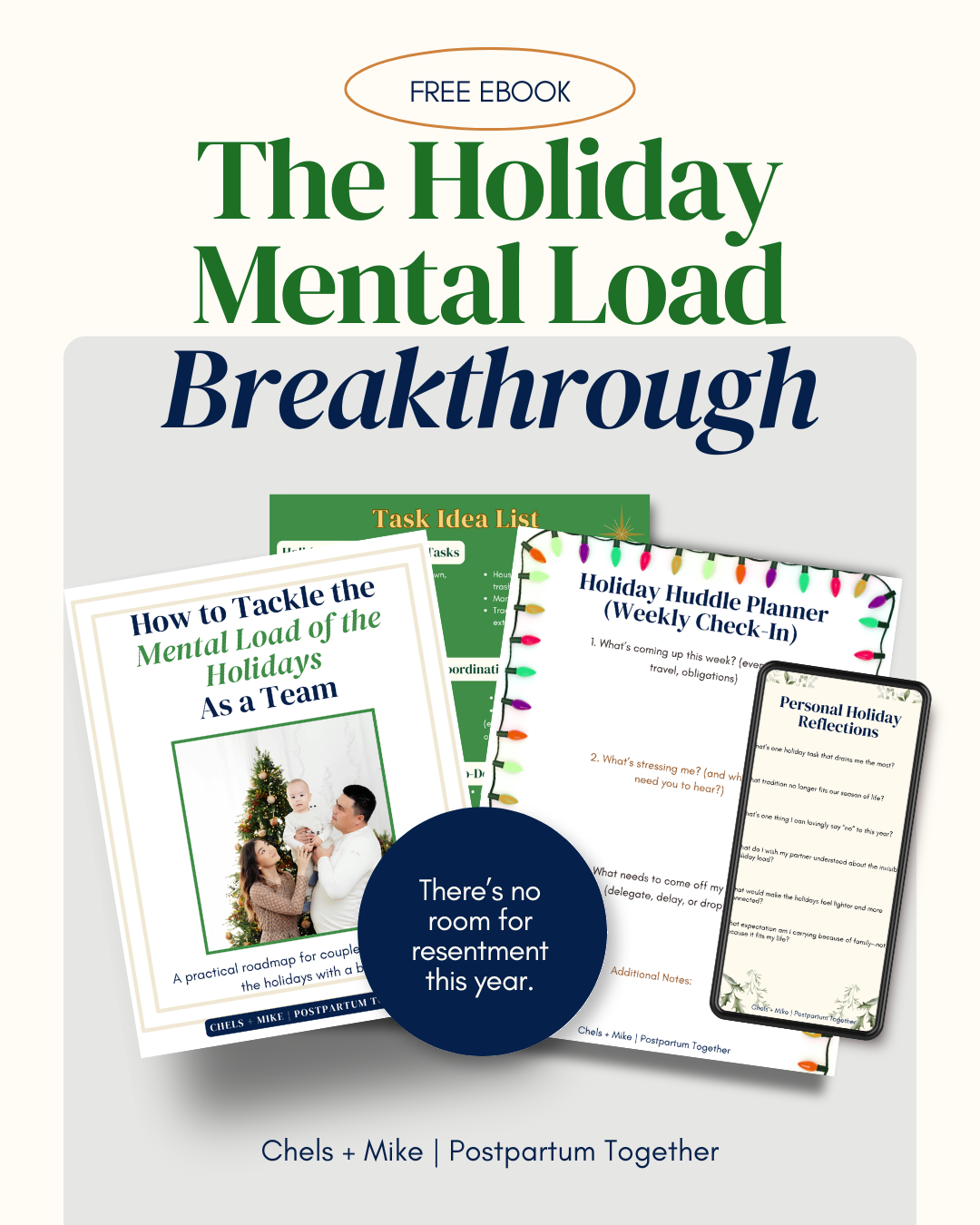
It includes:
gift lists
lane breakdowns
budgeting prompts
communication scripts
workload division tools
expectation-setting questions
seasonal planning worksheets
Use it together—not just one of you—so you can save time, energy, money, and at least six chaotic last-minute trips to Target.
This is where holiday gifting becomes manageable, meaningful, and shared.
