Holiday Mental Load Series: Day 8 — The Holiday Huddle
The 10–15 minute weekly conversation that prevents resentment, overwhelm, and December meltdowns.
If there’s one tool that has saved more relationships during December than anything else we teach, it’s this:
The Holiday Huddle.
A weekly, 10–15 minute grounding conversation that keeps you and your partner aligned, supported, and working as a team instead of slipping into silent resentment or last-minute chaos.
Most couples don’t struggle because they don’t care about each other.
They struggle because they’re not aligned—especially during the holidays.
Let’s change that.
Why December Tension Isn’t About the Stuff — It’s About the Surprise of the Stuff
Holiday stress doesn’t usually come from events, gifts, or logistics themselves.
It comes from not knowing what’s coming.
It’s the:
“Wait, that’s THIS weekend?”
“I didn’t know we were doing that.”
“How am I supposed to fit all this in?”
“I thought you were handling the gift for your sister.”
“You never told me daycare was closed.”
“Why is this the first time I’m hearing about this?”
Those invisible assumptions become very visible conflict fast.
And when you’re new parents?
The stakes get louder because every plan now runs through a nap schedule, overstimulation limits, feeding windows, supplies, car logistics, and the realities of your emotional bandwidth.
December can start to feel like you’re living inside your Instant Pot—high pressure, high heat, low capacity.
The Holiday Huddle releases that pressure.
What Is a Holiday Huddle?
It’s a short weekly conversation with four simple steps:
What’s coming up?
What’s stretching us?
What needs to come off our plates?
What are our roles?
That’s it.
But the impact is huge.
This one tool turns holiday chaos into clarity.
It’s proactive instead of reactive.
And it brings couples back into “team mode” instead of survival mode.
Inside the Holiday Mental Load Breakthrough, we walk you through exactly how to do this, but here’s the full breakdown so you can start today.

Inside the Holiday Mental Load Breakthrough, we walk you through exactly how to do this, but here’s the full breakdown so you can start today.
STEP 1 — What’s Coming Up This Week?
Put everything on the table:
events
tasks
school activities
travel plans
gift deadlines
appointments
family expectations
childcare closures
hosting details
If it’s not named, it stays invisible.
And invisible tabs always come back to bite you.
This step prevents the classic:
“I didn’t know that was happening.”
“I didn’t know that was my job.”
“I didn’t know we were committed to that.”
Naming the week removes the friction before it starts.
STEP 2 — What’s Stretching Each of Us?
This is not problem-solving.
This is honest naming.
Stretch points might include:
too many events
budget worries
emotional tension with family
fear of judgment
burnout
social pressure
weather concerns
overstimulation
lack of rest
needing more time as a couple
worry about naps or meltdowns
the invisible emotional labor
A study from the Journal of Social and Personal Relationships found that couples who name their stressors weekly experience a significant drop in conflict because both partners know where the other is emotionally.
This step tells your partner:
“Here’s where I need support.”
“Here’s where I might be reactive.”
“Here’s the layer underneath the logistics.”
Instead of guessing how to help, your partner gets a clear map.
STEP 3 — What Needs to Come Off Our Plates?
Something has to be the short straw.
You cannot do everything.
And not everything matters equally.
Ask:
What are we doing because we want to?
What are we doing because of guilt or habit?
What aligns with our values?
What drains us without adding meaning?
What is simply too much for our current bandwidth?
One deleted obligation can lighten the entire week.
Sometimes the best holiday tradition is doing less so you can enjoy more.
STEP 4 — What Are Our Roles? (Lead + Support)
THIS is the step that prevents resentment.
Most couples operate in a pattern where:
one partner leads everything
the other “helps” when asked
That still leaves one person mentally carrying the entire load.
Instead, assign leadership roles by category:
“I’ll lead travel prep; you support.”
“You lead gifts; I’ll support.”
“I’ll take meals; you take dishes.”
“You take emotional labor with your family; I’ll take mine.”
“I’ll lead on scheduling; you lead on communication.”
Lead + support = shared responsibility.
Not one person doing everything and the other person guessing.
This step builds trust, prevents micromanaging, and eliminates the “default parent” trap.
You’re not assigning chores—you’re assigning leadership.
And leaders don’t carry everything; they coordinate.
Why the Holiday Huddle Works
Because it replaces:
assumptions → clarity
overwhelm → structure
resentment → partnership
reactivity → proactivity
mental tabs → shared responsibility
This isn’t a big emotional summit.
It’s a 10–15 minute reset.
But it makes the entire week smoother.
Most couples don’t need perfect holidays.
They need aligned holidays.
Your Takeaway for Day 8
Talk first so you don’t have to fight later.
Most couples love each other deeply—
but they’re misaligned, overwhelmed, and carrying invisible load alone.
Your huddle changes that.
10–15 minutes now prevents:
the snapping
the shutdowns
the resentment
the overfunctioning
the “why am I doing everything?” spiral
the “why didn’t you help?” blowups
A calmer, more connected December starts with getting on the same page.
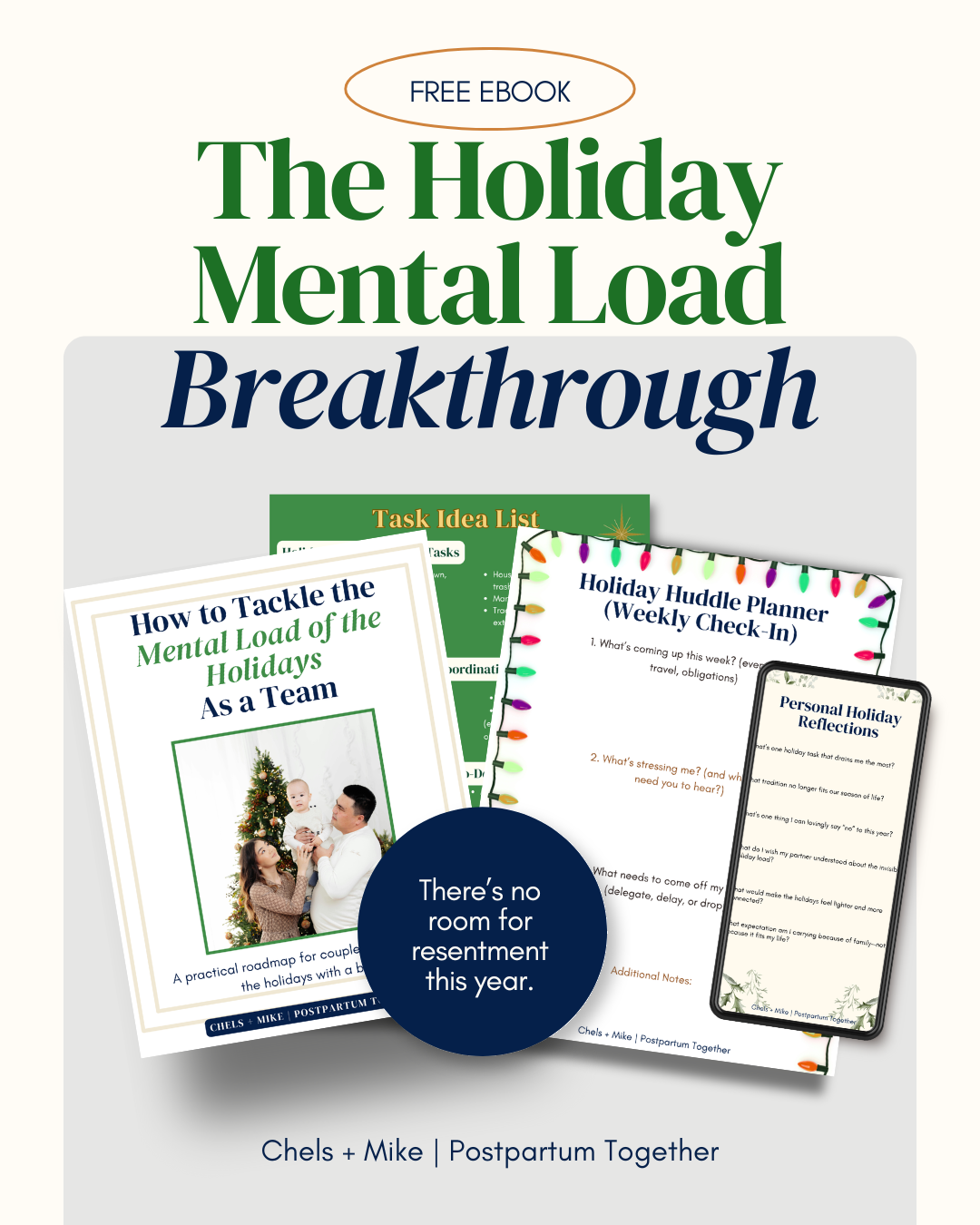
Download the Holiday Mental Load Breakthrough
Inside the guide, you’ll get:
Holiday Huddle questions
weekly templates
conversation prompts
category breakdowns
role assignment tools
load-sharing structures
emotional labor worksheets
Even if you’re tired.
Even if you’re touched out.
Even if you’re overwhelmed.
Take 10–15 minutes.
Do the huddle.
And then come back and tell us it wasn’t a total game changer.
