Holiday Mental Load Series: Day 9 — Mixed Emotions
Why new parents feel so many conflicting emotions during the holidays — and how to support each other through it.
Today’s topic is one almost every new parent feels during the holidays but hardly anyone names:
Mixed emotions.
We’re sold the idea that December should feel magical, joyful, cozy, and bright.
And sometimes it does.
But it can also feel:
heavy
complicated
overwhelming
lonely
grief-filled
overstimulating
pressure-packed
And when you’re in the early years of parenthood?
All of those emotions get amplified.
You’re not doing anything wrong. You’re human.
And the holidays are a season that pulls on every thread of your humanity at once.
Let’s unpack this so you don’t keep carrying it alone.
Why Mixed Emotions Hit New Parents Harder
Parenthood changes the emotional landscape of the holidays.
All the familiar traditions look different.
All the family dynamics feel different.
Your bandwidth is different.
Your capacity is different.
And yet the expectations often stay the same.
This creates a perfect storm of:

Joy + exhaustion
You’re grateful for your family and are simultaneously running on fumes.
Excitement + anxiety
You want to see relatives but dread overstimulation, nap disasters, or navigating tension.
Nostalgia + grief
You want to create beautiful memories for your child while missing the people or seasons you’ve lost.
Love + overwhelm
You adore your baby and also feel touched out, drained, or emotionally thin.
A 2020 study in Family Process found that new parents experience more emotional intensity during holidays because the nervous system is already taxed and the identity shifts of early parenthood heighten both joy and stress.
You’re not too emotional.
You’re responding normally to an abnormal amount of pressure.
Couples Don’t Always Feel the Same Emotions at the Same Time
This is one of the biggest trouble spots.
You and your partner may love each other deeply — and still be having two completely different internal experiences.
Examples:
One partner is energized and wants to dive into holiday activities.
The other feels completely spent and wants to cancel everything.
One feels sentimental and excited.
The other feels sad, disconnected, or grieving how different everything feels now.
One wants to be around family.
The other is bracing for overstimulation or comments that cut too deep.
If these differences aren’t named, couples start interpreting each other’s energy through fear or frustration:
“He doesn’t appreciate everything I’ve done.”
“She doesn’t want to spend time with my family.”
“He’s distant.”
“She’s being too much.”
“He’s ruining the holidays.”
“She’s avoiding everything.”
When we don’t have information, we fill the gaps with stories — usually the worst-case ones.
Not because we’re dramatic, but because the nervous system reacts to uncertainty with protection.
This is why emotional support has its own section inside the Holiday Mental Load Breakthrough.
Because emotions are mental load.
And invisible emotions create distance, while shared emotions create connection.
The Tool for Day 9: The Name + Ask Method
This is one of the simplest, most regulating, most relationship-protective tools we teach.
STEP 1 — NAME what’s coming up for you.
Without apology.
Without minimizing.
Without making it prettier than it is.
Examples:
“I feel really tender about missing my mom this year.”
“I’m overwhelmed by all the noise and activity.”
“I’m so touched out that the idea of another gathering feels like too much.”
“I’m anxious about the baby’s schedule and trying not to upset family members.”
“I’m grieving how different our traditions look now.”
“I feel pressure to make everything perfect, and it’s wearing on me.”
Naming emotions is not complaining.
It’s communicating.
It lowers the emotional temperature immediately because:
you stop holding it alone
your partner stops assuming or guessing
the two of you stop reacting to the wrong storyline
Emotional honesty is grounding.
Emotional silence is distancing.
STEP 2 — ASK for what you need.
Not with blame.
Not with demand.
With clarity.
Examples:
“I need to slow down this weekend.”
“I need reassurance that it’s okay for us to leave by 7 p.m.”
“I need you to take bedtime tonight so I can decompress.”
“I need us to skip two events so I don’t burn out.”
“I need a quiet morning the day after Christmas.”
“I need help carrying the emotional load with my family.”
A clear ask turns your partner from a mind-reader into a teammate.
Most partners want to help — they just need a map.
Why Naming + Asking Works (The Science)
According to research published in the Journal of Personality and Social Psychology, couples who share emotions openly and make specific requests experience:
decreased conflict
increased closeness
lower cortisol levels
higher relationship satisfaction
The nervous system calms when:
emotions are acknowledged
needs are spoken
support is clear
no one is guessing
Mixed emotions stop being a problem when they’re shared.
Your Takeaway for Day 9
Emotional honesty is one of the kindest gifts you can give each other during the holidays.
Not forced positivity.
Not pretending everything is magical.
Not performing strength you no longer have.
Not powering through because everyone else seems fine.
Honesty + clarity = connection.
Your partner cannot carry your whole emotional world — nor should they.
But they can hold space with you so you don’t feel alone in it.
You deserve a holiday that feels whole, not hollow.
You deserve to feel supported, not swallowed by expectations.
You deserve room for the tender parts of this season too.
Download the Holiday Mental Load Breakthrough
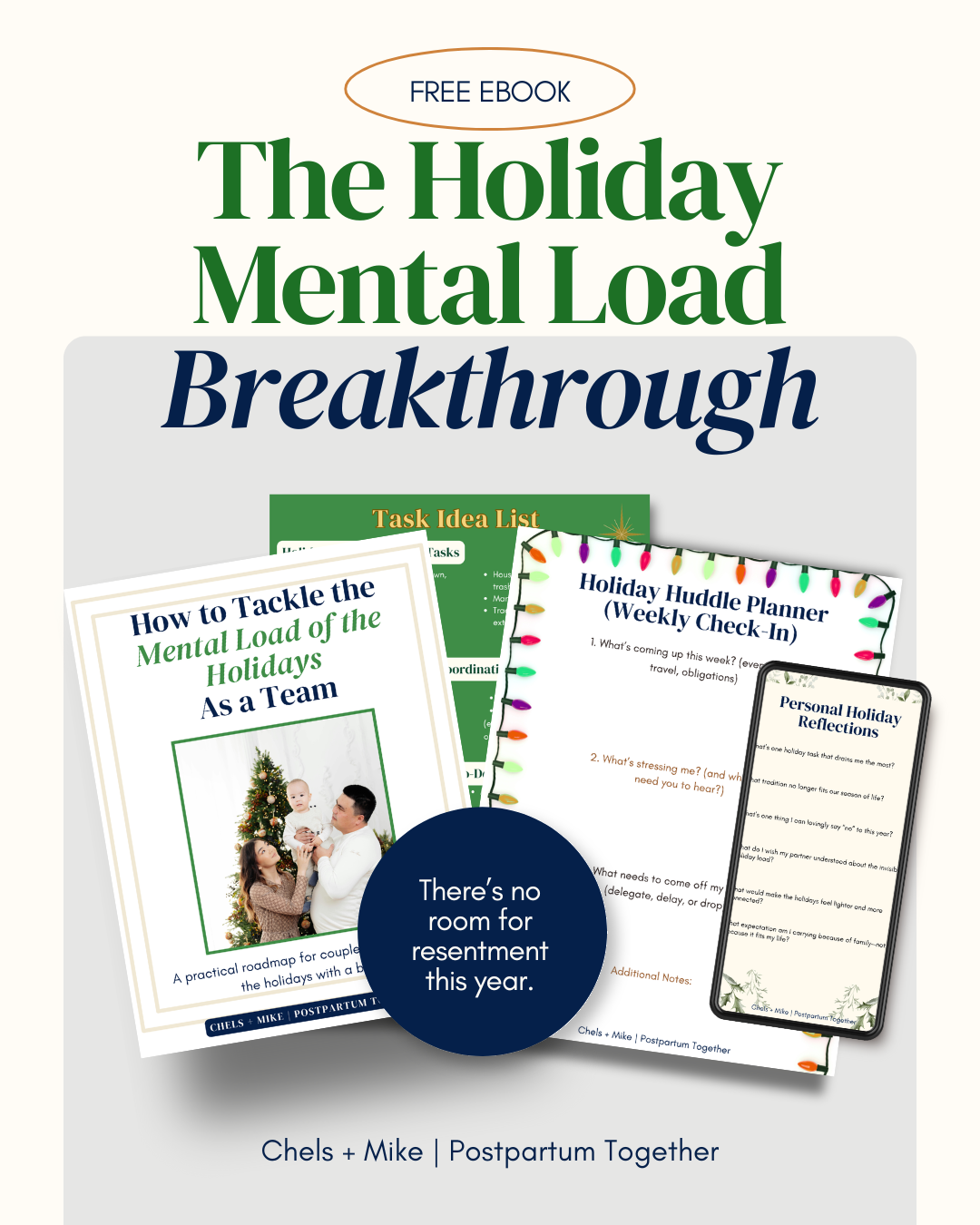
Inside the guide you'll find:
emotional labor prompts
boundary-setting scripts
mixed-emotions worksheets
expectation conversations
support tools for high-pressure seasons
This season gets lighter when your emotions are shared instead of suppressed.
