When we became parents, we thought we were ready.
We were solid teammates. Good communicators. Partners in life.
But then something crept in that we didn’t see coming: the mental load.
It showed up slowly.
Tracking nap windows.
Remembering when to size up diapers.
Mentally mapping the next pediatrician appointment.
Before long, instead of feeling like teammates, we were both exhausted and frustrated. And we were wondering why the weight of parenthood felt so uneven.
If that sounds familiar, you’re not alone.
One of the most common questions couples ask is:
How do we share the mental load in marriage without constant conflict?
The good news is that once couples can see the mental load clearly, it becomes much easier to share it.
What Is the Mental Load in Marriage?
The mental load is the invisible planning, tracking, and remembering that keeps a household running.
It’s the tabs constantly open in your brain.
Chelsea describes it like this:
“It’s like when your computer slows down because you’ve got 27 tabs open. You’re pushing it to the limit and just hoping it doesn’t crash before you finish what you’re doing.”
That’s what the mental load feels like.
Especially in early parenthood.
The mental load often includes things like:
• Remembering nap windows and feeding schedules
• Tracking pumping, childcare, and visitor boundaries
• Planning groceries and meals
• Managing pediatrician appointments and vaccines
• Keeping track of clothing sizes and seasonal changes
• Coordinating daycare forms and school communication
• Monitoring developmental milestones
Chelsea remembers listing all of this out to Mike one day and watching his face change.
“It blew me away how much I was carrying that he didn’t even see. And when he said, ‘I could never keep track of all that,’ I remember thinking… I don’t have a choice.”
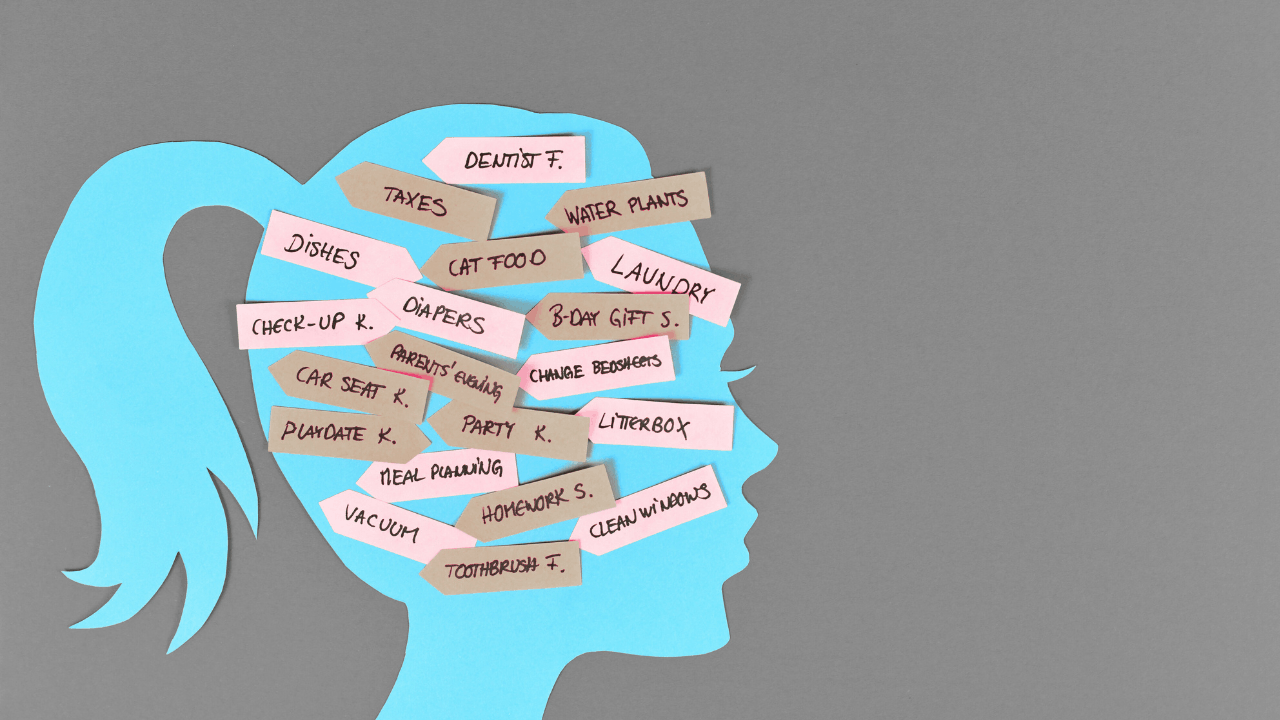
That’s the reality of the mental load.
And in many marriages, one partner carries far more of it.
In early parenthood, the invisible load can look like:
Remembering nap windows and feeding logs
Coordinating pumping schedules, childcare, and visitor boundaries
Grocery planning and keeping track of finances
Juggling pediatrician appointments, vaccines, and developmental milestones
Making sure there’s a bigger size of diapers in the closet
Switching clothes out of closets because kids grow out of them so fast
Why the Mental Load Often Falls Unevenly
Even couples with good intentions can fall into unequal patterns.
A few things contribute to this:
1. Gender conditioning
Many women are raised to anticipate needs, remember details, and manage emotional environments.
That conditioning doesn’t disappear when a baby arrives.
2. Cultural expectations
Society still glorifies the “overwhelmed supermom.”
But when something falls through the cracks, she’s also the one blamed.
3. Assumptions inside the relationship
Mike admits he assumed Chelsea would naturally take the lead.
“I thought this was her field of expertise because she carried and birthed the baby. If she needed help, she’d call me in.”
Chelsea admits she reinforced that at times too.
“I remember saying things like ‘mother’s intuition.’ But what I didn’t realize was how much pressure I was putting on myself.”
Research backs this up.
Sociologist Allison Daminger found that women disproportionately carry the cognitive labor of households, even when both partners work full time.
Over time, this imbalance can lead to burnout, resentment, and disconnection in marriage.
How the Mental Load Impacts Marriage
When the mental load stays invisible, it slowly erodes connection.
You start hearing phrases like:
“I do everything.”
“You don’t even notice what I carry.”
Or on the other side:
“Nothing I do is ever enough.”
Mike describes it like this:
“When you’re throwing darts at your only teammate, everyone loses.”
One partner feels overwhelmed.
The other feels constantly criticized.
And both start drifting away from the teamwork that used to define the relationship.
That’s why learning how to share the mental load in marriageis so important.
Why Is the Mental Load So Exhausting for Mothers?
The mental load is exhausting because it never truly shuts off.
Unlike physical chores, the mental load is ongoing cognitive work. It’s remembering what needs to happen next, anticipating problems before they happen, and keeping track of dozens of moving pieces in family life.
Many mothers describe it as having constant tabs open in their brain.
Even during moments of rest, their mind is still tracking things like:
• the next pediatrician appointment
• when the baby will need bigger clothes
• what groceries are running low
• whether daycare paperwork is due
• how to coordinate family schedules for the week
Research on cognitive labor in households shows that this type of invisible planning often falls disproportionately on women. Over time, carrying the majority of this responsibility can lead to mental fatigue, resentment, and emotional disconnection in marriage.
That’s why learning how to share the mental load in marriage is so important. When both partners take ownership of planning and tracking responsibilities, the constant mental pressure begins to ease.
Many couples are surprised by how much invisible work appears once they write everything down. Using a mental load checklist for couples can help make these responsibilities visible for the first time.
How to Share the Mental Load in Marriage
Here’s the framework we use with couples and in our own relationship:
See it. Say it. Slay it.
1. SEE IT
You can’t change what you don’t see.
Ask your partner:
“What are you tracking right now that I might not see?”
Chelsea remembers when Mike first asked her this.
“It stopped me in my tracks. Even I hadn’t realized how much I was carrying until I started saying it out loud.”
Try this simple exercise.
Mental Load Brain Dump
Take five minutes and write down every task, worry, and responsibility currently in your head.
Everything.
When couples do this exercise, they often realize how much invisible work is happening behind the scenes.
2. SAY IT
Next, bring the invisible load into the light.
The goal is not to compare lists.
It’s to combine them.
Chelsea explains:
“The first few times I shared my list, Mike felt defensive. Like he needed to prove he was doing enough. But eventually we realized this wasn’t about scorekeeping. It was about seeing everything in one place.”
Helpful conversation starters include:
• “Here’s something I’ve been carrying that I didn’t realize until now.”
• “Can I show you the list of what’s been in my head lately?”
• “I think this task has been sitting with me longer than I realized.”
The conversation works best when both partners stay curious instead of defensive.
3. SLAY IT
Now redistribute the load intentionally.
Not necessarily 50/50.
But fair and visible.
Some responsibilities make sense for one partner based on strengths.
Others might rotate weekly.
And some tasks simply don’t matter right now.
Chelsea puts it this way:
“My babies have never thanked me for Pinterest-worthy baby-led weaning plates. Looking back, I could have saved myself a lot of stress.”
Ask yourselves:
• Is this task actually valuable for our family?
• Or is it pressure from Instagram, extended family, or unrealistic standards?
Mike adds:
“The goal isn’t perfection. It’s teamwork.”
A Simple Example of Sharing the Mental Load
Take meal planning.
Instead of one person holding all the steps, couples can divide the responsibility.
For example:
Partner A
• Plans weekly meals
• Creates the grocery list
Partner B
• Shops for groceries
• Prepares dinner
Or divide by meals.
One person owns breakfast.
The other owns dinner.
The key difference is ownership.
Once something belongs to one partner, the other person doesn’t have to track it anymore.
That’s how the mental load actually lifts.

One example of the mental load I remember distinctly was feeding choices, specifically baby-led weaning or traditional baby food. This felt especially taxing because our families didn’t understand the concept of BLW, and so we felt we had to research more to justify our choices.
Why Sharing the Mental Load Matters for Your Family
The mental load isn’t just about chores.
It shapes the emotional atmosphere of your home.
Chelsea explains it like this:
“Your baby doesn’t just grow in your arms. They grow in the emotional atmosphere between you.”
When one partner is drowning and the other feels shut out, tension fills the house.
But when couples share the mental load, something shifts.
The relationship starts to feel like a team again.
And that stability benefits everyone in the family.
Try This Today
If you want to start sharing the mental load in your marriage, try this tonight:
Write down your mental tabs for 3–5 minutes.
Share the lists without defending or explaining.
Choose one responsibility you’ll fully own this week.
Small shifts create momentum.
And momentum rebuilds teamwork.
👉 Download our Mental Load Brain Dump Templateto help you see what’s actually happening inside your household.
And if you want deeper guidance, our 6-Week Couples Connection Program helps couples build systems like this so they don’t just survive parenthood — they stay connected through it.
Because the mental load doesn’t have to stay invisible.
When couples see it, say it, and slay it, they stop keeping score and start building a true partnership again.
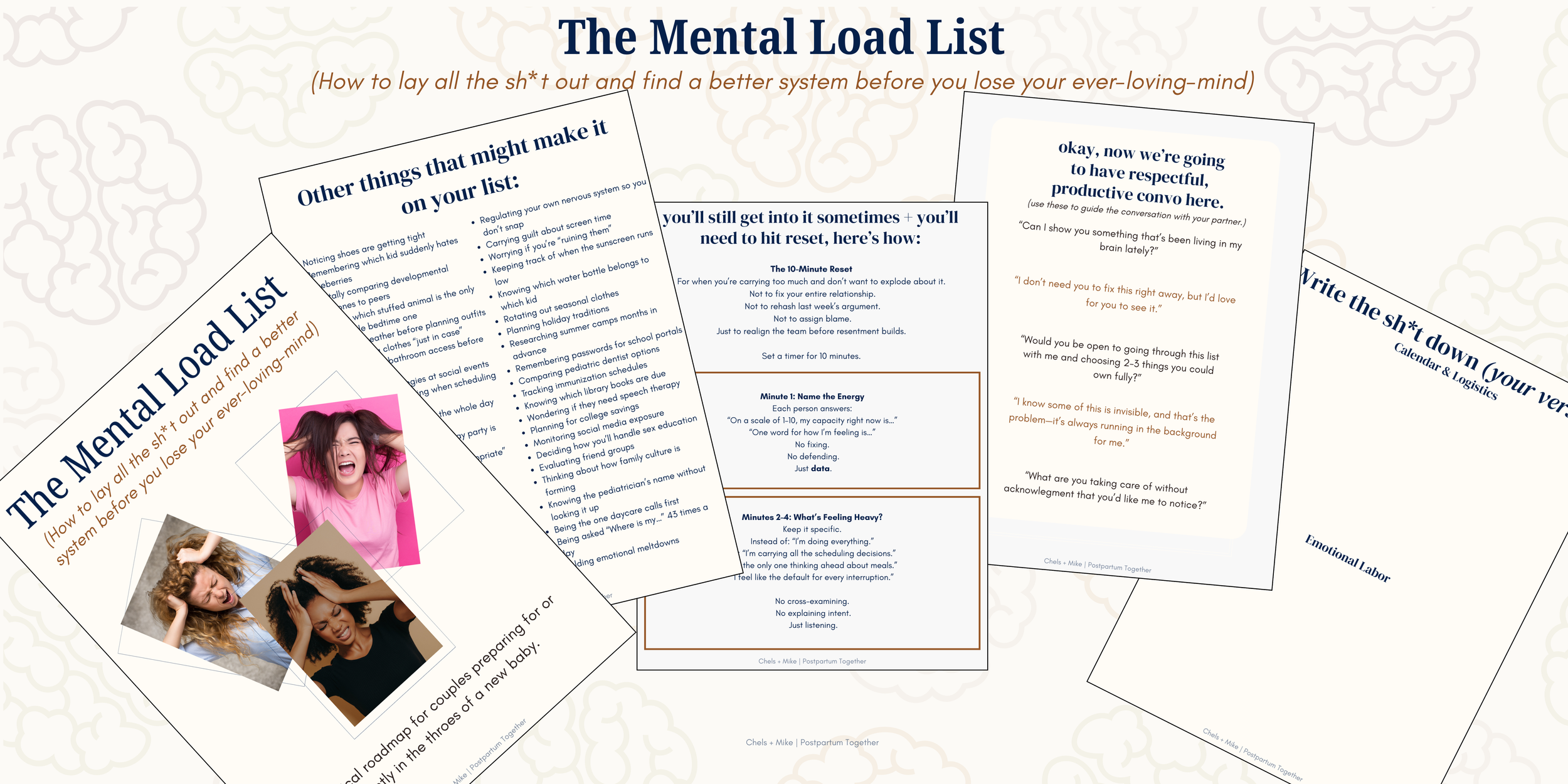
And if you want guided support, our 6-Week Couples Connection Program gives you tools like this so you don’t just survive parenthood—you thrive in it together.
Bottom line: The invisible load doesn’t have to stay invisible. When you see it, say it, and slay it, you stop being scorekeepers and start being true teammates.
FAQ: Sharing the Mental Load in Marriage
What is the mental load in marriage?
The mental load refers to the invisible planning, remembering, and organizing that keeps a household running. This includes tracking appointments, planning meals, managing schedules, and anticipating family needs. In many marriages, one partner—often the mother—ends up carrying most of this cognitive labor.
When should couples talk about the mental load?
The best time to talk about the mental load is before resentment builds.
For many couples, the imbalance becomes noticeable during big life transitions like pregnancy, the early postpartum months, returning to work, or when family schedules become more complex.
Ideally, couples start talking about the mental load before the baby arrives, when there is more space to set expectations and divide responsibilities intentionally. Our Prep for Us program helps expecting couples have these conversations early so they enter parenthood with a clearer plan for communication, roles, and shared responsibilities.
If you're already feeling the strain, it's not too late. Many couples begin redistributing the mental load after months or years of frustration. Our Back to Us coaching program helps couples reset their communication, rebalance responsibilities, and rebuild a sense of teamwork after the stress of early parenthood.
The key is not waiting until someone is completely overwhelmed. The earlier couples bring the invisible load into the open, the easier it is to share it.
Why does the mental load fall mostly on moms?
Research shows that women are often socialized to anticipate needs and manage family logistics. Even in households where both partners work, studies have found that women tend to carry more of the cognitive labor involved in running a home. Without intentional conversations, this imbalance can happen naturally over time.
How can couples share the mental load more fairly?
Couples can share the mental load by first making it visible. A helpful starting point is writing down every task that someone is tracking mentally. Once the full list is visible, couples can redistribute ownership of responsibilities so that both partners are actively managing parts of the household.
What’s the difference between helping and owning a task?
Helping usually means one partner still carries the responsibility and asks the other for assistance. Ownership means one partner is fully responsible for planning, remembering, and completing the task without needing reminders.
Ownership is what actually reduces the mental load.
What is an example of sharing the mental load?
A common example is meal planning. One partner might own planning the meals and creating the grocery list, while the other partner owns grocery shopping and preparing dinner. The key difference is that each partner fully manages their responsibility without the other having to track it.
