How to Break Through the Mental Load of Motherhood
As a new mom, I didn’t have the words to say that I needed help with the mental load. I didn’t know what that even meant and I didn’t have the language to communicate it with my husband.
I knew that I was mentally and emotionally exhausted on top of the physical exhaustion. I knew that my brain could not slow down. I knew that it felt like every moment was spilled with research or decision-making or keeping tabs on something that needed to be done.
I knew that it felt like I had no time to think about myself. But it felt like if something went wrong, it would fall on me.
Not because my partner was bad, or wasn’t showing up as a dad, but didn’t understand how much having a baby would impact us, and how much new understanding and communication would be required. Because I’m sure that our brains are biologically wired a little bit differently, but additionally, society perpetuates a lot of messaging around good parenthood.
Seven years later, I teach my parents about how to be a good team. I specifically want to help them have less resentment, fewer arguments, less self-doubt and overwhelm, and stronger teamwork.
If you’ve already had the mental load conversation and nothing changed, start here:
Stop waiting for the “perfect time” and create a repeatable check-in instead
Name the mental work, not just the physical tasks
Get specific about ownership—not just “help”
Expect defensiveness (and know how to move through it)
Build a system together so you’re not the default manager
We’ll break each of these down below.

The Mental Load of Early Motherhood
In recent years, the concept of the mental load has gained significant traction online and in the media, sparking conversations about gender roles, equity in relationships, and the challenges faced by modern families. Countless articles, social media posts, and personal anecdotes shed light on the reality of the mental load and its impact on maternal well-being. Examples abound, from the mental checklist running through a mom's mind as she prepares for a family outing to the emotional labor involved in managing conflicts and soothing worries within the household.
However, there seem to be limited resources and real strategies for addressing the mental load in your life. This post will give you a better understanding of the mental load of motherhood. Also, I'm providing you with 5 important tips for discussing the mental load with your partner so you can increase teamwork. Doing this brings a lot of value to you personally, and to the relationship. By using these conversations and strategies, couples enjoy more connectedness, less resentment, and more opportunities to see one another as a teammate and partner.
What Does "Mental Load" Even Mean?
The term "mental load" refers to the invisible and often unrecognized burden of managing numerous tasks, responsibilities, and emotional labor that primarily falls on an individual, typically a mother or caregiver. It describes the cognitive and emotional efforts required to keep track of various aspects of daily life, such as household chores, childcare responsibilities, scheduling, and managing family dynamics.

The mental load can include a wide range of tasks including but not limited to:
-Planning meals and grocery shopping to organizing family schedules
-Coordinating doctor's appointments
-Managing finances
-Providing emotional support to family members.
It's often characterized by the constant mental checklist running through a person's mind as they navigate the complexities of family life and strive to meet the needs of everyone involved. If you've ever felt like your brain is a computer browser with 497 tabs open at once, that's what you're describing.
While the term "mental load" originated in discussions about gender roles and household responsibilities, it has broader implications beyond just domestic tasks. The mental load can also encompass the emotional labor involved in managing friendships, extended family, mediating conflicts, and providing care for others, both within and outside the home.
Overall, the concept of the mental load highlights the often unseen and unacknowledged work that individuals, particularly women, take on to maintain the functioning of their households and support the well-being of their families. It's a crucial aspect of understanding the challenges faced by caregivers and the need for equitable distribution of responsibilities within relationships and society as a whole.
How Other Moms Describe the Mental Load
In an informal poll of my audience, seasoned moms described the mental load like this:
"Carrying all of the schedules, menu plans, bills, due dates, and appointments while also balancing everyone's emotional needs."
"Being the temperature gauge for the emotional needs of the family, often including the partner."
"Carrying all the needs in your mind at all times, making sure the glass balls don't drop."
"Responsibility for making sure what needs to happen does, when it needs to, and how it needs to."
"Feeling like there's never a break and self-care is far off because you are responsible for everyone's needs first."
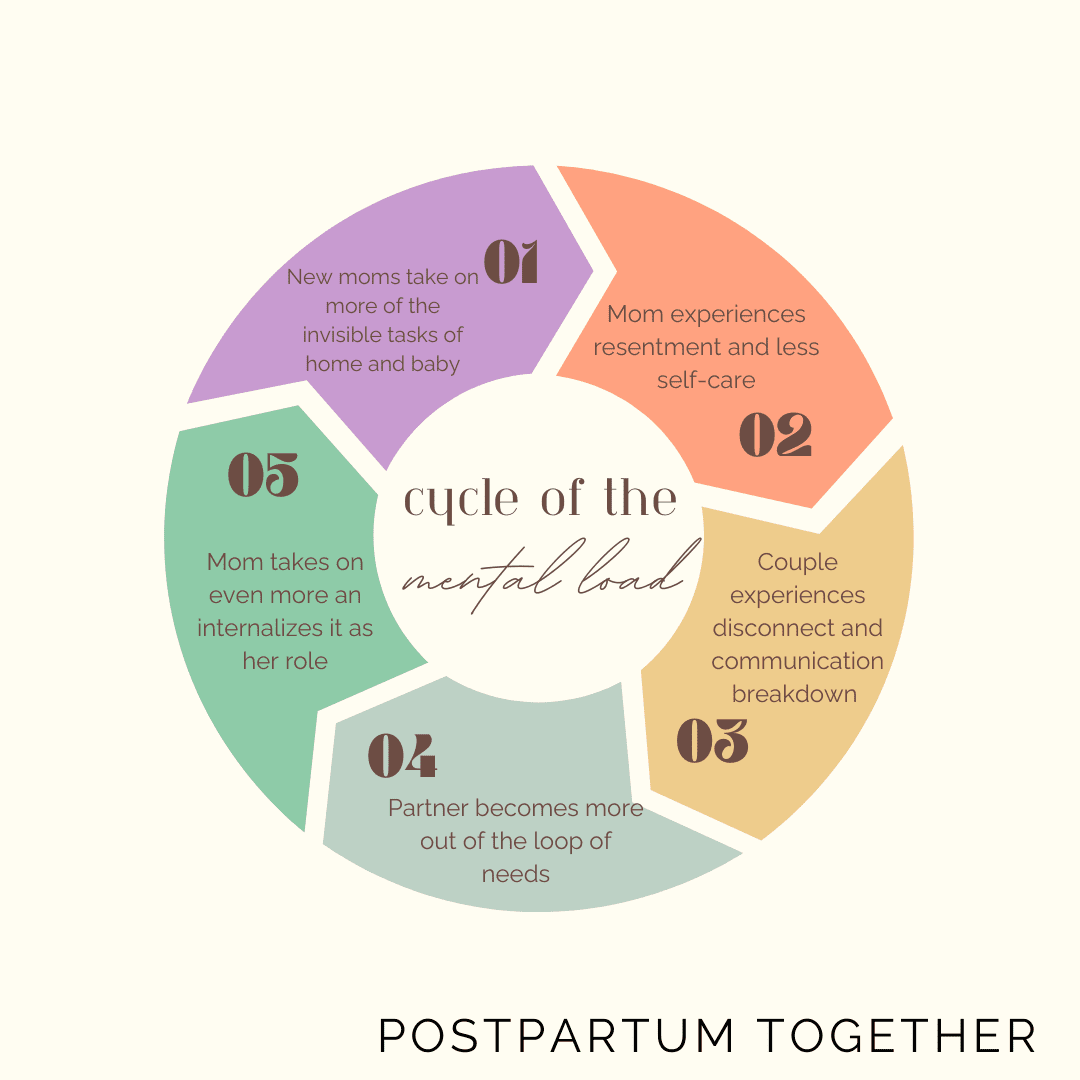
The Ongoing Cycle of the Mental Load
Often women, particularly mothers, find themselves in a cycle that perpetuates the mental load. This can be impacted by several things such as cultural backgrounds, societal impact, internalized expectations of parenthood, understanding of what "needs" to be done, societal messages around who is responsible for home and childcare, etc. This will NOT look the same for any two families, but most families face the need to understand, discuss, and plan around the mental load.
5 Tips for Talking to Your Husband or Partner About the Mental Load
1. Stop waiting for the “right time” and create a rhythm instead
If you only bring this up when you’re already overwhelmed, it will always feel like a complaint.
Instead of one-off conversations, build a simple weekly check-in.
That way you’re not:
bottling it up
or bringing it up mid-frustration
You’re talking about it before it turns into resentment.
2. Talk about the thinking—not just the doing
Most conversations stay stuck at:
“Can you help more with ___?”
But the real issue is:
“I’m the one constantly thinking about everything.”
If you don’t name the invisible part, your partner will keep solving the wrong problem.
3. Replace “helping” with ownership
This is where most couples get stuck.
Helping = you’re still managing
Ownership = it’s fully off your plate
Instead of:
“Can you help with dinner?”
Try:
“Can you fully own dinner 2 nights a week—from planning to cleanup?”
That shift changes everything.
4. Expect defensiveness, and don’t let it derail the conversation
This is the part no one talks about.
Even a good partner might hear:
“I’m failing”
So they:
shut down
get defensive
or try to explain themselves
If you expect that, you won’t panic when it happens.
Stay focused on the goal:
→ being a team, not proving a point
5. Build a system so you’re not the default manager
Talking about it once won’t fix it.
You need something outside of your brain holding the plan:
a shared list
a weekly reset
clear roles
Because if everything still lives in your head… You’re still carrying the mental load
Statistics and Research Relevant to the Mental Load
- According to a survey by the American Psychological Association, 75% of mothers report feeling overwhelmed by their daily responsibilities, including managing the mental load.
- A study published in the Journal of Marriage and Family found that women are more likely than men to take on the majority of household and childcare tasks, contributing to higher levels of stress and burnout among mothers.
A study conducted by researchers at Harvard University found that the mental load placed on mothers has a significant impact on their cognitive functioning and decision-making abilities. The study highlights the need for greater recognition and support for mothers in managing the complexities of family life while maintaining their well-being.
Getting Support Around the Mental Load of Motherhood
Discussing the mental load with your partner is essential for fostering understanding, support, and cooperation within your relationship. By following these tips and approaching the conversation with empathy and honesty, you can work together to address the challenges of managing household and childcare responsibilities, ultimately strengthening your bond as a couple and as parents.
Sometimes it's difficult to bring up and continue conversations with your partner about topics that can feel so personal and emotional. Having a third-party expert to help you understand what you and your partner want, how you view the mental load, and how to create a teamwork dynamic that works for both of you can be an invaluable choice that improves the future of your relationship. I help couples do just this. Schedule a free 15-minute exploration call to learn about how I can help you and your partner so that you can enjoy more teamwork, better connection, and more ease.