Postpartum Depression, Anxiety & Psychosis: 5 Real PMAD Stories
5 Women Share Their Experiences With Postpartum Mental Health
Postpartum depression, postpartum anxiety, OCD, PTSD and postpartum psychosis are among the mental health conditions that can affect women during pregnancy and after birth. Collectively, many of these are referred to as perinatal or postpartum mood and anxiety disorders (PMADs).
They don't always look the way we expect. A new mom may experience sadness, but she may also experience panic attacks, intrusive thoughts, rage, intense fear, difficulty sleeping or feeling unlike herself. In more severe cases, postpartum psychosis can cause hallucinations, delusions, paranoia or a loss of touch with reality.
These five women generously shared their postpartum mental health stories to help other mothers recognize that symptoms can look very different from person to person—and that seeking professional support matters.
The signs and symptoms of postpartum depression, anxiety, and other postpartum mood disorders (see types of disorders here) can be obvious or they can be hidden. The mission to remove maternal mental health stigmas is a very important one. In the depths of new motherhood, the last thing a woman needs to feel is alone.
WHAT IS POSTPARTUM DEPRESSION?
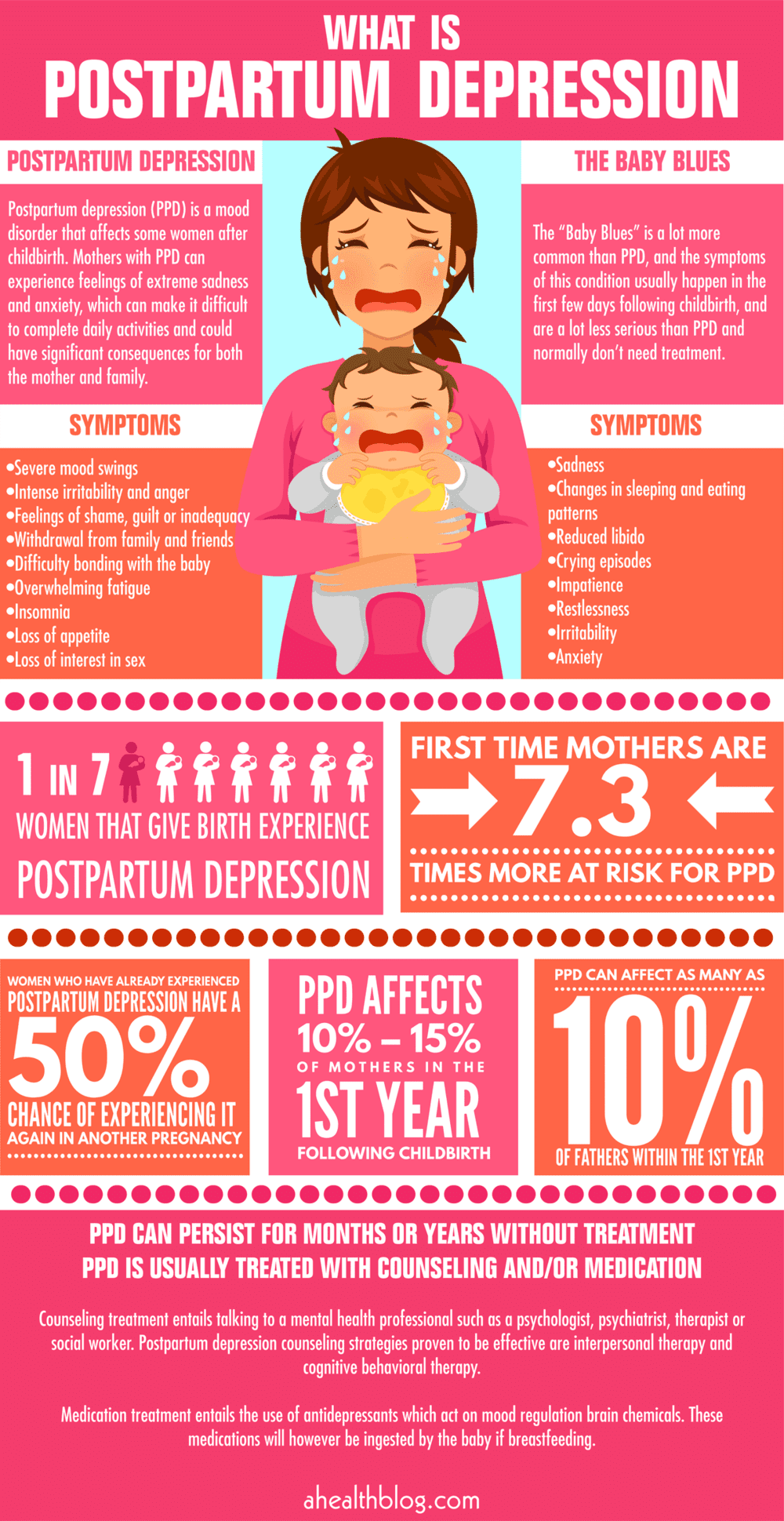
Image via: AHealthBlog
According to the Center for Disease Control and Prevention, Postpartum Depression doesn’t feel the same for everyone and can be identified by a number of criteria. We often think of depression as feeling tired, uninterested, and sad. While this can be true, these are not the only markers.
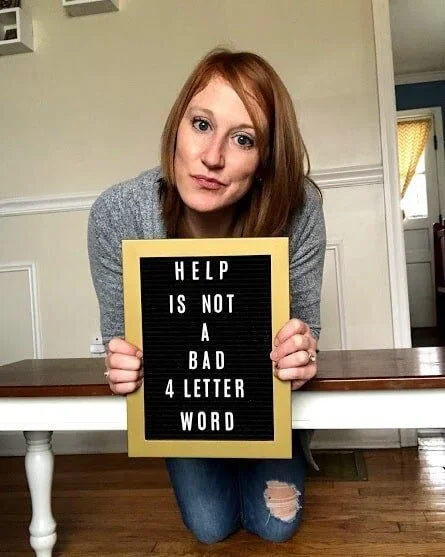
Other presenting symptoms may be irritability, guilt, loss of energy, and more. Because having a baby creates a big shift, it is important to know the distinguishing signs and talk to your medical provider about the severity of your symptoms. While the Edinburgh Postnatal Depression Scale is given at most postnatal checkups, postpartum depression (and other maternal mental health disorders) can present at any time within the first year of postpartum, therefore many women go unidentified and untreated. By raising awareness and sharing stories, we give moms hope support, and encouragement. Remember, HELP is not a bad word. It is a sign of strength!
WHAT IS POSTPARTUM ANXIETY?
Less discussed, but no less important PMAD types are often housed under the “anxiety” diagnosis. More specifically, some women experience postpartum anxiety, OCD, PTSD, or psychosis.
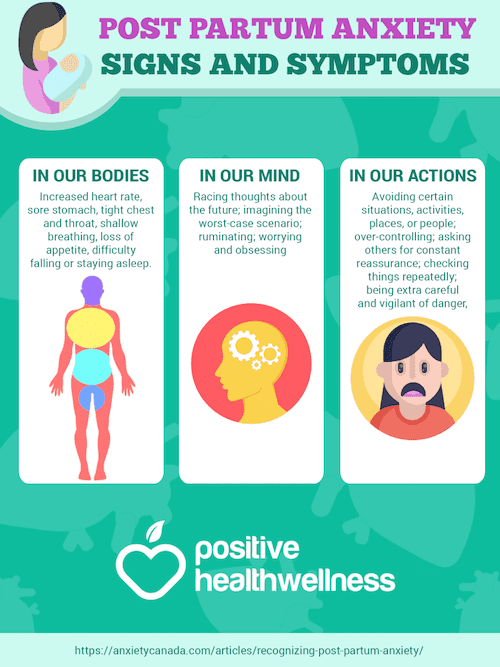
Image: Anxiety Canada
What is Postpartum Psychosis?
Postpartum psychosis is a serious postpartum mental health condition that is different from postpartum depression and anxiety. It can involve a loss of contact with reality, including delusions, hallucinations, paranoia, extreme agitation, rapid mood changes, confusion, or a decreased need for sleep.
Although postpartum psychosis occurs far less frequently than postpartum depression or anxiety, it is considered a psychiatric emergency. Someone experiencing symptoms needs immediate medical evaluation and should not be left alone with their baby until they have received appropriate help.
Postpartum psychosis is also important to discuss without reinforcing the idea that people experiencing it are inherently violent or dangerous. Symptoms can vary significantly from person to person, and the condition is treatable.
Postpartum Support International reports that postpartum psychosis occurs in approximately 1–2 of every 1,000 births and emphasizes that an active episode should be treated as a medical emergency.
Postpartum Depression vs. Postpartum Anxiety vs. Postpartum Psychosis
Postpartum depression: may include persistent sadness, hopelessness, loss of interest, anxiety, guilt or difficulty functioning.
Postpartum anxiety: can include intense worry, racing thoughts, physical anxiety symptoms, fear that something will happen to the baby or difficulty relaxing.
Postpartum psychosis: may include hallucinations, delusions, paranoia, severe confusion, agitation, extreme mood changes or loss of contact with reality.
ACOG distinguishes postpartum depression from temporary "baby blues" and includes anxiety, bipolar disorder, suicidality and postpartum psychosis among the mental health conditions clinicians should screen for during pregnancy and postpartum.
TELLING OUR POSTPARTUM PMAD STORIES
We bring light to one another with our stories, and women have shared their stories in this post in hopes that it will bring normalization and light to other moms. If you or someone you know identifies with the symptoms of Postpartum Depression, reach out (get help here). There is no shame in helping yourself so you can better help your family.
The following is a collection of responses from moms willing to share their experience with Postpartum Depression.
WHAT DID YOU KNOW ABOUT POSTPARTUM MOOD AND ANXIETY DISORDERS (PMAD) PRIOR TO YOUR EXPERIENCE?
I knew about PMAD prior to postpartum in the sense of what they are, however, I didn’t know the reality of them or how common they are. I also really prepared myself and felt prepared for pregnancy and labor but did not feel as prepared for postpartum. I read January Harshe’s book Birth Without Fear pre-birth (and first of all it’s amazing and everyone should read it), which helped open my eyes to postpartum. But the actual reality of postpartum really shocked me. I’m starting to feel human again, my baby is 6 weeks old, and as I reflect on the past 6 weeks it’s been tough, unknown, and scary at times. It’s also been so beautiful and I love being a mom, but mentally and emotionally I was not prepared.
I didn’t know much about postpartum depression going into my first pregnancy. I heard people talk about getting tired, sleep deprived, and having child get on your nerves, but it sounded like the norm. Like it was something every mom dealt with. After my sons birth in 2016, the first couple of weeks were rough but that was because I was breastfeeding and he was eating every 2 hours. I had no time to sleep! My husband and I came up with a night time routine and everything was fine after that. A couple of years later getting pregnant with our little girl, I started to worry how I was going to balance two small children. No one could give me an answer. I kept hearing, “It’s great for your kids because the will have someone to play with so close in age.” But what about me?!
I work in the medical field to we studied PMDs in school so I was aware of them from the stand point of signs/symptoms, diagnosis and treatment. I also knew that I was at risk for a PMD because i have a history of anxiety. I knew that a lot of Moms struggle with PMDs but dont seek help.
I was familiar with postpartum mood disorders, mainly because my twin sister suffered horrible postpartum depression. When I got pregnant, this was a fear of mine, as I’ve struggled with anxiety for my whole teenage/adult life.
I did not know anything about them when I was pregnant or really after
WHAT MADE YOU REALIZE YOU MIGHT HAVE A POSTPARTUM MOOD DISORDER?
I realized I had PMAD when I had a panic attack in the bulk section of my natural food me store. I’ve had anxiety on and off during different seasons of my life and was feeling anxious on and off during early postpartum. Once my mom left and the newborn honeymoon was over (my baby was sleeping for 5 hour stretches for 2 weeks straight, he was never fussy and rarely cried, loved to just hang out and snuggle, self soothed and put himself to sleep if we laid him down etc.Once that 3rd week hit all of that changed) I started realizing I was getting anxiety especially during car rides, driving, being out in public on my own, when I wasn’t holding my baby, at night (I kept checking to make sure he was breathing often and not getting much sleep), and if we stayed home for extended amounts of days. My husband and I had been running errands together and the baby fell asleep in the car so my husband stayed with him while I ran into the store. I couldn’t find the one thing I needed and started getting really panicked and then couldn’t breathe and just started crying in the middle of the store for “no reason”. I immediately left and cried all the way home because it was such a scary and unknown feeling. Since I’ve had a few other episodes like that.Once I had a second panic attack at takeoff on the plane while traveling with my husband and baby (all I could imagine ... and the images were so vivid and clear ... was my whole family dying in a plane crash which triggered it), I reached out to my midwife.
Afternoon my daughter was born, I immediately started drinking to cope with the stress. Balancing drinking with breastfeeding was easy with her because she slept longer than my son (4-5 hours). I was angry, short to discipline my son, easily agitated, arguing with my husband, sleep-deprived, and not getting a break. Even when I went back to work, I had to breastfeed every couple of hours therefore my “mommying” never stopped. I knew how I was feeling after birth was different from my son because I couldn’t shake it with a simple schedule change. My life was entirely different.
I realized I have a PMAD because I did not want to leave my baby at home without anyone but myself. Whenever I would leave even to go to the grocery for an hour, I would not be able to focus on what I was doing, my legs would get weak, my heart would race and I would feel nauseated. I cried almost every night, partly due to normal postpartum hormones but I would cry at night before bed out of sheer terror that something would happen to my baby overnight. By the same token, I would fear falling asleep because I did not want to not wake up to my baby if she was in distress.
Luckily I was prepared for the warning signs. Once my baby was born, I had the “normal” crying spells and attributed that to sleep deprivation and hormones. However, when I was having nightly panic attacks and scared to leave the house, and constantly fearing about worst-case-scenarios — I knew my anxiety was back. I also began to feel really sad, mourning my “old self” and wondering if I’ll ever be “myself again”
I didn’t really even know, I just knew I was not okay.
WHO WAS YOUR SUPPORT THROUGH POSTPARTUM?
My mom is amazing. She’s a labor and delivery nurse and was present for weeks leading up to my birth, during my birth, and for 2 weeks after my birth. I talk to her on the phone almost everyday and she’s been so honest and open with everything. My midwife and I have a close bond so she has been a big support. And I’ve also been attending a Mother’s support group that is absolutely amazing. The first time I went I cried when I did my check-in because I finally felt normal. So many other women were experiencing the same things I was. I heard other mothers verbalize and really be honest and open I felt so safe and known.
I got untraditional help from a prayer specialist and stopped drinking on New Years' Eve 2018.
My husband. My sister is also a big support system of mine but I ca not talk to her about these things like I can my husband. She is very "chill" and laid back, not easily stressed.
My husband and my midwife were incredibly supportive. Even with them, though, (and with my knowledge that this is normal) I was nervous to be completely honest in my postpartum evaluation. I felt ashamed for not being 100% thrilled about motherhood.
I am not really sure I had any support. I never really shared where I was or what I was going through. Does anyone ever really understand? I wish my family would have seen the signs.
WAS IT HARD TO SPEAK UP ABOUT NEEDING HELP? WHY?
It was hard to acknowledge that I needed help to myself. I was having so much guilt for my feelings and struggles. We walked along 2 1/2 year walk of infertility and during that time I would have given anything for a baby. I fell pregnant naturally right before starting fertility treatments. It felt/still feels like such a gift that I feel guilty a lot when I’m feeling like it’s so hard or crying or being negative.So it was really hard to say to my husband - I need help and it was really emotional at my 6 weeks check-up last week to tell my midwife. I wasn’t scared to tell her and not necessarily ashamed but I acknowledged how guilty I was feeling and was met with a hug and affirmations that I didn’t need to feel guilty and that this was all ok. My brain knows that I’m not my thoughts and anxiety but my body reacts like that and sometimes I feel so out of control of my anxiety it scares me.
It’s still a constant battle dealing with postpartum depression because as moms, we never stop. We have moments where we really kickass and somewhere we beat ourselves up because we didn’t balance our day accordingly. But what I have learned is that we have to ask for help, we have to give ourselves grace, and, most of all, we are not the only ones dealing with this. All moms do in one form or another.
It wasn’t hard to speak up but it was hard to let myself be vulnerable and accept that I may need to ask for help. I am an extremely confident and independent person so to let my guard down was hard. It was also hard to accept that I have a PMAD because of my medical career..you do not want to acknowledge the fact that you HAVE what patients come to you to TREAT. Also, it is the mentality that "I know what this is and what is happening but why can't I overcome it?"
Somehow I was able to be brave and honest with the questionnaire about PMD- and my midwife was SO understanding. We talked and she wrote me a prescription for breastfeeding-safe anxiety medication/anti-depressant. She talked through my fears of risks associated with breastfeeding and showed me statistics about the safety of the medication she prescribed.
One day I sat in my PCP office and I told her how I had these thoughts of “Well what if a car hit me when I turned at an intersection” or “What if I hit this parked car driving down the road?” One day I very vividly remember thinking if I could just go somewhere like even a hospital for a few days to get away- I told her- and she looked at me- and I never cried or anything. She asked me what stopped me and I said: “ Well, of course, my kids.” She asked if I was okay that day and I said “Yeah, sure” and she immediately prescribed me medication.
HOW DID YOU FIND SOME RELIEF FOR YOU POSTPARTUM DEPRESSION/ANXIETY/OTHER?
I’m still working on relief. I feel like acknowledging it and speaking about it has helped a lot! Also, I started working out again - I worked out often prior to pregnancy and as often as I could throughout my pregnancy. It’s my outlet for stress relief and something I enjoy doing. It makes me feel strong and empowered. I’ve only been to 2 workouts but have noticed such a change in my mental clarity and emotional being after.I’m seeking out counseling and have an appointment in the next few weeks. I was prescribed medication - my midwife and I really talked long and hard about it. I told her that I wanted to see how these other things I was implementing helped me and felt comfortable in waiting to take medication until I felt like I needed to. I’ve had anxiety in the past and I know my limits. I don’t suggest this for everyone ... but I feel confident in that choice for now because I am an open book with a conversation with my husband and my mom and have a lot of support and a place and multiple people to go to when I feel like I need it.
I got untraditional help from a prayer specialist.
I found relief by talking to my husband. I also was honest with my OB and I am on low dose Zoloft with has been a game-changer.
I’ve only been on medication for about a week now, but am already feeling relieved to have been honest with this experience. Knowing this is normal brought a lot of comforts.
I am not confident I had really ever found relief, it just became more manageable. I came out of the deep depression with better food and exercise but even to this day I still struggle with mom guilt and I do seek counseling for it all.
WHAT WOULD YOU TELL A NEW MOM ABOUT POSTPARTUM MENTAL HEALTH?
I am very honest with friends who are about to have their first babies when they ask how everything is going. I tell them that I love being a mom and I love my baby more than anything but that I’ve been struggling a lot. I tell them about the support group I go to and how important it is to have support.I tell them that if they have struggled to please be honest and reach out. I tell them that all those feelings and emotions are ok and that they aren’t in our control. I remind my friends with babies now that they are the best mom to their baby and to fight the need to feel perfect and meet the standards and expectations of others. And to ask for help - ask for help holding the baby so you can have 5 minutes alone, or ask for help around the house, or with other everyday tasks, etc.
We have moments where we really kickass and somewhere we beat ourselves up because we didn’t balance our day accordingly. But what I have learned is that we have to ask for help, we have to give ourselves grace, and, most of all, we are not the only ones dealing with this.
It is ok to ask for help. Were tough but the emotions and stress of motherhood is A LOT for anyone to handle. Do not let something get in the way of the happiness and joy and new memories to be made with your baby. Also, the concept and risk factors for SIDS are HAMMERED into your head in the hospital before discharge..follow the recommendations and it will be OK. I did and still do obsess over the temperature in the bedroom and making sure my baby is breathing but if you are following the rules your baby will be OK!
I want a new mother to know PMDs are NORMAL and to be brave and honest in their postpartum evaluation. In fact, reach out sooner than your 4-6 week follow up if you are concerned. Your doctor/midwife/OB will be glad to help— they won’t judge you :)
I would and have told a mom to not be a hero and ask for help. Be okay and don’t rush. It’s like empathy vs sympathy and somethings can’t be understood until they experience it.
WHAT DO YOU WANT SOCIETY TO KNOW ABOUT MATERNAL MENTAL HEALTH?
I wish more women would be more honest and didn’t feel like they had to mask postpartum struggles and disorders. I wish society wouldn’t pressure me into feeling the need to be perfect or meet standards or expectations. I wish people would stop asking me how my baby sleeps and then making me feel bad when I tell them he wakes up every 2 hours to eat ... he’s 6 weeks old and is a freaking baby!I wish people would ask me ... how are you doing and take the time to listen and actually act on being supportive- bring me a coffee, come hold my baby so I can enjoy a hot shower AND wash my hair and shave my legs in the same shower session, drop off a meal at my door, etc.
All moms face this in one form or another.
Motherhood and the postpartum phase isn’t all glamorous Instagram pics and full nights of sleep. It’s hard, it’s scary, it’s a lot of work for everyone involved. Women are ALLOWED to struggle and ask for help. Women are ALLOWED to break down and be vulnerable. Let’s support these women. I am by no means a feminist but unless you have a baby and have experienced postpartum ANYTHING, you cannot possibly understand so educate yourself.Offer a hand or an ear to a new mom. Don’t offer to watch the baby so mom can "sleep" because what mom is going to be able to sleep while someone who doesn’t know anything about their brand new baby babysits? Offer to do the dishes, vacuum, take the dog for a walk, go to the grocery.
I want society to realize how common postpartum mood disorders are, to de-stigmatize them, so ultimately women feel more comfortable getting the support they need.
That this is real and there is help- too many women have too much pressure and not enough support in postpartum.
RELATED: Why Mom Guilt is Bullshit
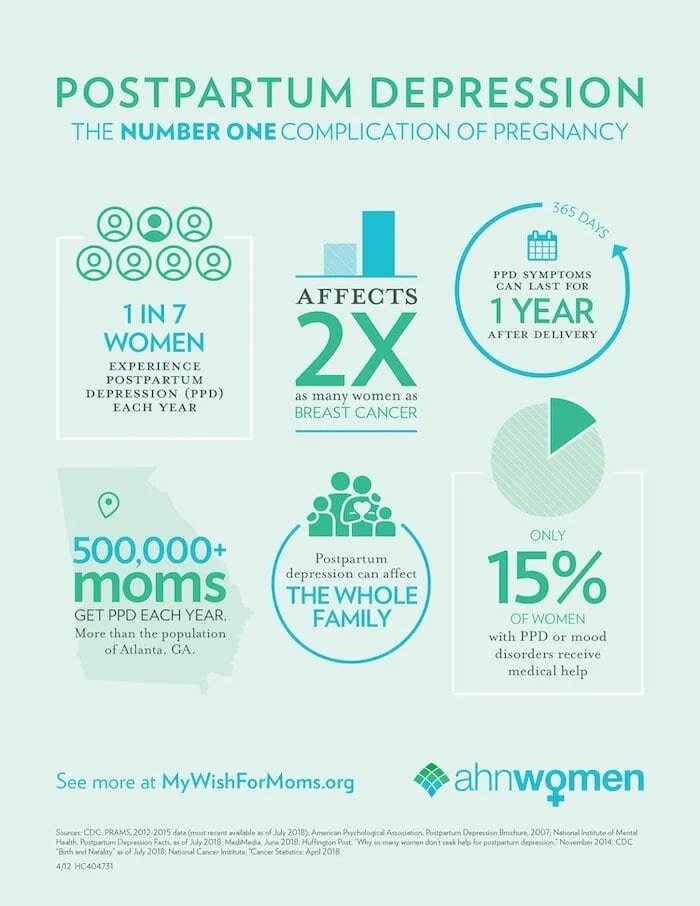
Signs and Symptoms of Postpartum Mental Health Conditions
Postpartum mental health conditions do not always look like sadness. Postpartum depression symptoms can include persistent sadness, hopelessness, irritability, guilt, loss of interest in things you normally enjoy, difficulty bonding with your baby, or feeling like you are not yourself.
Postpartum anxiety symptoms may look more like constant worry, racing thoughts, panic, physical tension, difficulty sleeping even when the baby is sleeping, repeatedly checking on the baby, or feeling unable to relax. Some mothers also experience postpartum panic attacks or frightening intrusive thoughts after having a baby.
Intrusive thoughts can feel especially alarming. They may involve unwanted thoughts or mental images of something bad happening to the baby. These thoughts can occur with postpartum anxiety or postpartum OCD and are often deeply upsetting to the person experiencing them. Having an unwanted intrusive thought is not the same thing as wanting to act on it.
Postpartum psychosis symptoms are different and may include hallucinations, delusions, paranoia, severe confusion, unusual beliefs, extreme agitation, dramatic mood changes, or losing touch with reality. Symptoms of postpartum psychosis require immediate medical evaluation.
Because postpartum mental health warning signs can vary so widely, you do not need to wait until symptoms become severe to talk with your OB, midwife, primary care provider, or mental health professional. ACOG recommends screening for depression and anxiety during pregnancy and again during postpartum care.
Frequently Asked Questions About Postpartum Mental Health
What does PMAD stand for?
PMAD stands for Perinatal Mood and Anxiety Disorders. The term describes several mental health conditions that can occur during pregnancy and after having a baby, including depression, anxiety, panic disorder, obsessive-compulsive disorder (OCD), post-traumatic stress disorder (PTSD), bipolar-related conditions, and postpartum psychosis. Symptoms and severity can look very different from one person to another.
What is the difference between postpartum depression and postpartum psychosis?
Postpartum depression can cause persistent sadness, hopelessness, guilt, irritability, loss of interest, anxiety, and difficulty functioning. Postpartum psychosis involves a loss of contact with reality and may include hallucinations, delusions, paranoia, confusion, unusual beliefs, or severe changes in mood or behavior. Postpartum psychosis is much less common, but it is considered a psychiatric emergency that requires immediate medical attention.
What are early warning signs of postpartum psychosis?
Possible postpartum psychosis warning signs include severe confusion, paranoia, hallucinations, delusions, unusually elevated or rapidly changing moods, extreme agitation, behavior that seems significantly out of character, or a decreased need for sleep that goes beyond normal newborn sleep disruption. A person experiencing symptoms of psychosis needs immediate professional evaluation.
Can postpartum anxiety cause intrusive thoughts?
Yes. Intrusive thoughts after having a baby can occur with postpartum anxiety and are particularly common with perinatal OCD. These may be unwanted thoughts or images of something frightening happening to the baby. The thoughts are typically upsetting and inconsistent with what the parent actually wants. Postpartum Support International notes that intrusive thoughts associated with anxiety or OCD are different from losing touch with reality during psychosis.
When should someone seek help for postpartum mental health symptoms?
You do not have to wait until postpartum depression or anxiety feels unbearable before asking for help. Talk with a healthcare professional when symptoms are persistent, distressing, interfering with daily life, making it difficult to sleep or care for yourself, or simply making you feel that something is not right. ACOG recommends routine screening for depression and anxiety during pregnancy and postpartum care. Symptoms involving hallucinations, delusions, severe confusion, loss of contact with reality, or immediate safety concerns require urgent medical care.
What’s your story momma?
What do you want moms and/or society to know about Postpartum Mood Disorders and Maternal Mental Health?
Keep the conversation going in the comments. Share this with loved ones so they don’t feel alone. If you’re currently pregnant and wondering how to prepare for your postpartum, I took some of the work off your plate with this Free Postpartum Plan Checklist.